Projektbeschreibung
12 Tons Per Day Thermoplastic Road Marking Paint Production Line Project
The customer had been working in the road marking paint industry for about seven years. After gaining experience in the business, he decided to start his own factory and produce thermoplastic road marking paint.
When he first contacted us, he had not rented a workshop yet. He was looking for a suitable factory building of approximately 7,000 m². The planned building had a wall height of around 9 Meter, with the highest point reaching approximately 11 Meter.
His initial target was 12 tons of finished paint per day, equivalent to roughly 1–2 tons per hour depending on the daily working hours. Since this was a new business, he wanted to keep the initial equipment investment reasonable while making sure the production arrangement would suit his actual products.
What Makes This Project Different?
At first, this looked like a relatively small thermoplastic road marking paint project. The daily output was not particularly high, and a single ribbon mixer could meet the basic production requirement.
But there was one important detail: the customer planned to produce both white and yellow thermoplastic road marking paint.
This changed the way we looked at the equipment configuration. The question was no longer just how much the mixer could produce per hour. We also needed to consider how the customer would handle different colors during daily production.
If you are planning a similar factory, especially if you intend to produce more than one color, you are welcome to share your requirements with us. Your planned output, product colors, workshop dimensions and packaging method can all affect the equipment layout. We would rather understand these details first than recommend a configuration based only on production capacity.
FUREIN First Proposal: One Ribbon Mixer with a Packing Machine
Considering the customer's daily production target and the fact that he was starting a new business, our first proposal was a simple configuration with one ribbon mixer directly connected to a packing machine.
The process was straightforward: raw materials were fed into the ribbon mixer, mixed according to the required formulation, and then discharged into the packing machine.
For a new producer making around 12 Tonnen pro Tag, this arrangement has some practical advantages. There are fewer machines to purchase, the layout is easier to arrange, and daily operation and maintenance are relatively simple.
Most importantly, it avoids unnecessary investment at the beginning. If the customer only planned to produce one color, or changed colors occasionally, we would still consider this a suitable option.
We did not want to recommend a more complicated system without a good reason. Our first consideration was how to help the customer start production with a reasonable investment.
For customers starting with a relatively small production capacity, a simpler configuration may be a better choice. You can also take a look at our small thermoplastic road marking paint production line to see the typical equipment arrangement and available options.
The Main Problem: Producing White and Yellow Paint with One Mixer
During our discussions, the customer confirmed that he wanted to produce both white and yellow thermoplastic road marking paint.
We then explained a practical issue that he needed to consider before choosing the first configuration.
When changing from yellow paint to white paint, some pigment may remain inside the mixer, around the discharge outlet or in other material-contact areas. Even a small amount of yellow residue can affect the appearance of the next white batch.
Natürlich, the equipment can be cleaned before changing colors. But cleaning takes time, and it becomes an additional task every time the production color changes.
For a factory that regularly produces both white and yellow paint, using one mixer for everything may not be the most convenient choice.
We did not want the customer to save money on one mixer at the beginning but spend more time cleaning and arranging production every day. So we discussed another configuration with him.
FUREIN Second Proposal: One Shared Feeding System with Two Ribbon Mixers
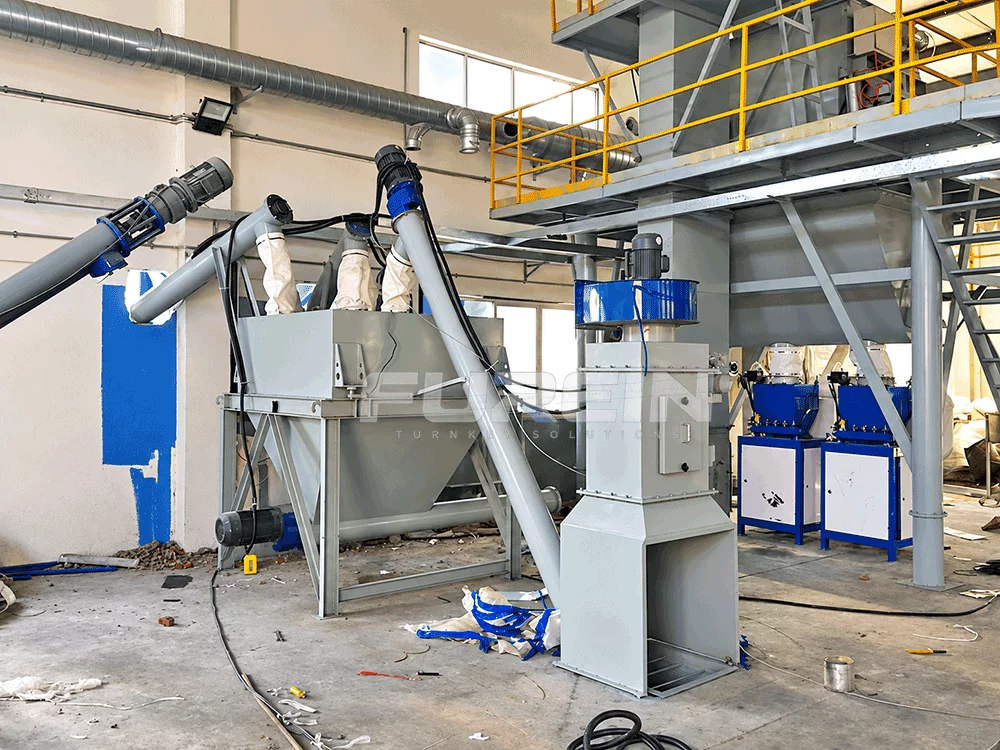
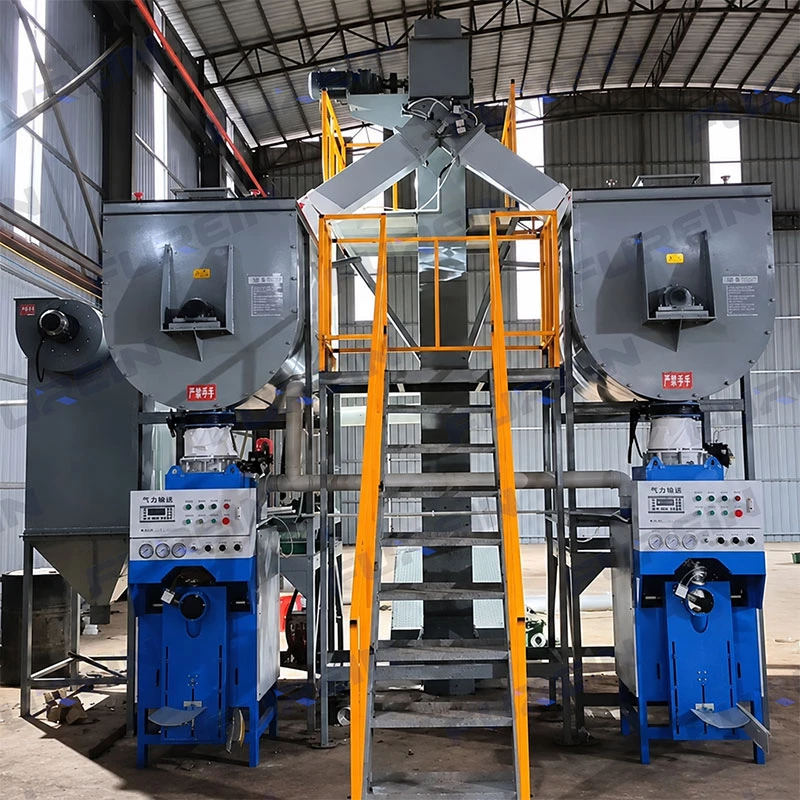
For the second proposal, we kept the main raw-material feeding system shared but added a second ribbon mixer.
The two mixers were arranged as independent mixing units. One could be assigned to white thermoplastic road marking paint, while the other could be used for yellow paint.
Auf diese Weise, the customer would not need to build two completely separate production lines. The main raw-material feeding equipment could be shared where appropriate, while the two mixing units would handle different colors separately.
This arrangement also gives the customer more flexibility. The two mixers can operate independently, and the layout allows both to work at the same time when the feeding and production arrangements permit.
For this customer, we thought this was a better balance. He needed to produce two colors regularly, but his target capacity did not justify duplicating the entire feeding system.
This project was designed around the customer's initial production target. If your factory requires higher output, automatic batching and centralized PLC control, you may also want to explore our automatic thermoplastic road marking paint production line.
Why We Kept One Feeding System Instead of Building Two Complete Lines
Adding a second mixer does not necessarily mean that the entire production line needs to be duplicated.
We looked at which parts of the system could reasonably be shared and which parts needed to remain separate.
The main raw-material feeding section could serve both mixers, while the mixing process remained independent for the two colors.
This avoided duplicating the main feeding equipment and kept the layout more compact.
Natürlich, the final feeding arrangement still needs to account for color-specific ingredients. Any material that could introduce unwanted pigment into another product must be handled appropriately. Sharing the main feeding equipment does not mean that every feeding point or material-contact component should be shared without consideration.
The purpose of this arrangement was to avoid unnecessary duplication while keeping the two colors separate where it mattered.
Choosing the Packing Machine: Valve Bag Packing
We also discussed the packing section during the equipment selection process.
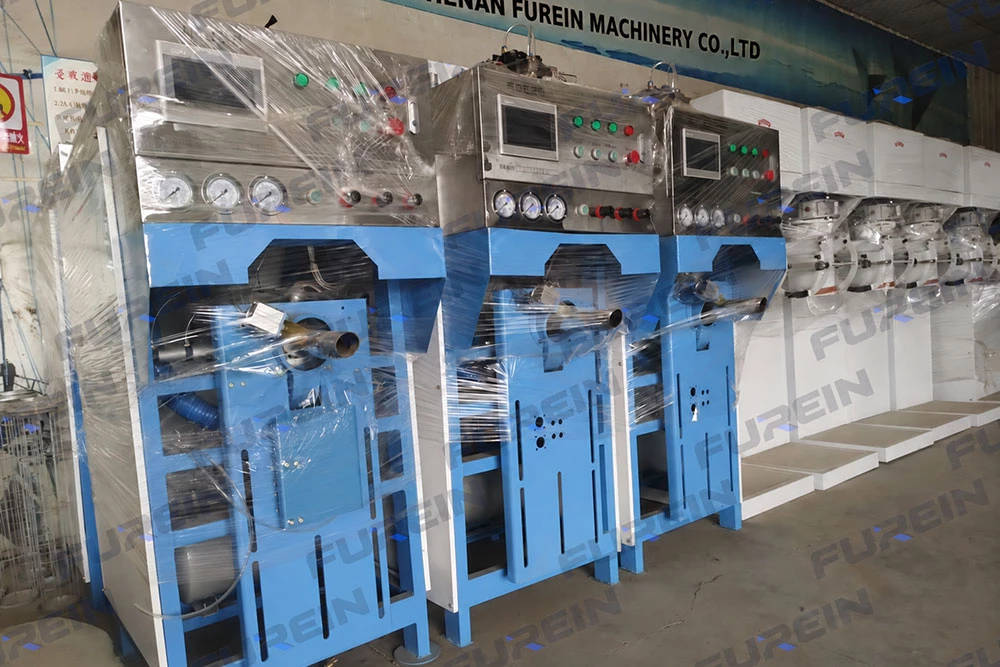
The customer finally selected a valve bag packing machine for the finished thermoplastic road marking paint. If you are comparing different packaging options, you can learn more about our Füllmaschine für Ventilsäcke, including its working principle and available configurations.
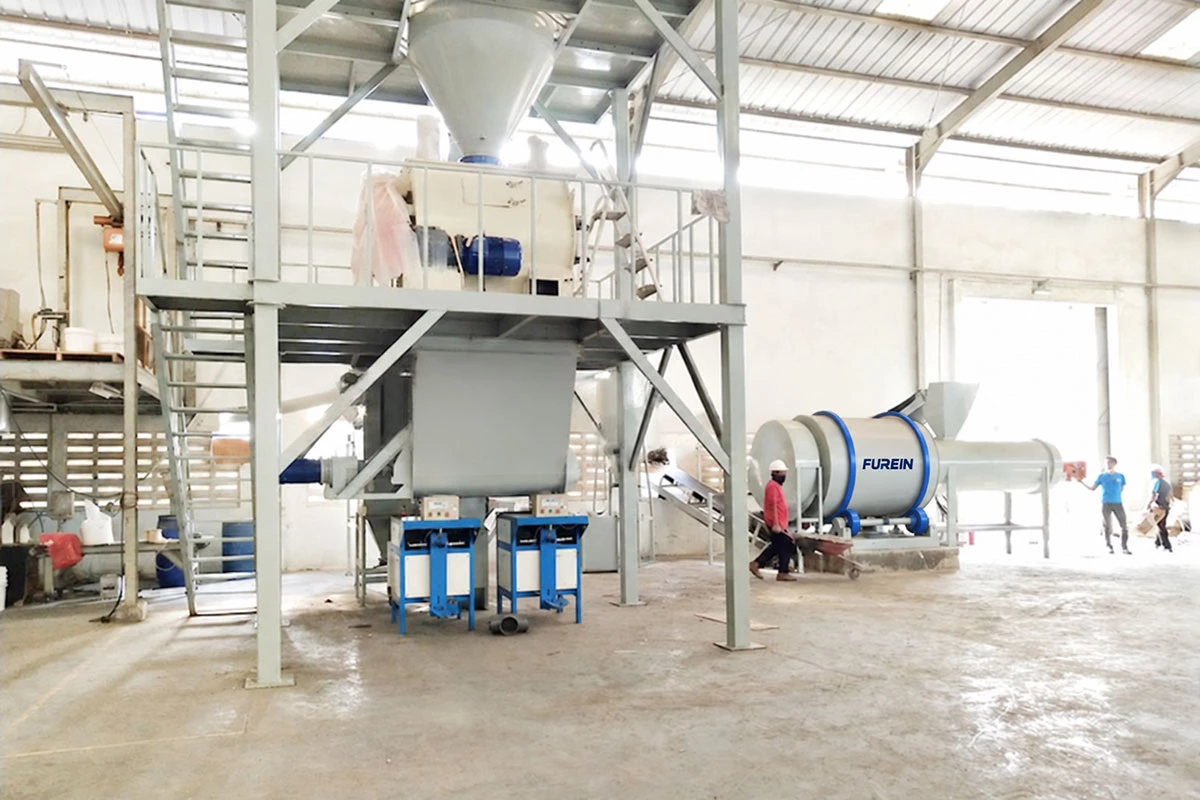
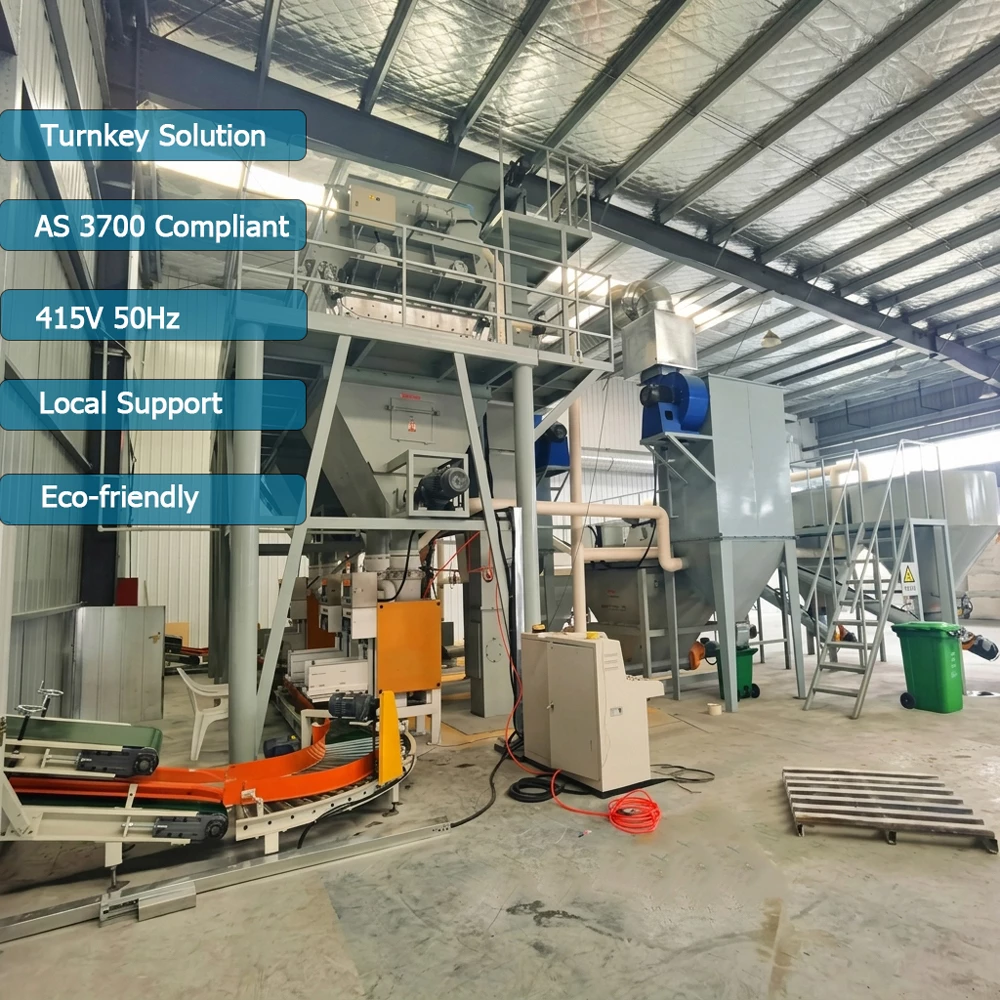
The packing machine was arranged below the mixing section so that the finished material could be discharged from the mixer and transferred to the packing position.
We selected the packing arrangement according to the customer's preferred bag type rather than simply choosing a machine based on its advertised packing speed.
For a new factory, it is better to confirm the bag type, target bag weight and required packing capacity before finalizing the packing equipment. These details affect the discharge arrangement and the connection between the mixer and the packing section.
From Layout Drawings to the Final Equipment Configuration
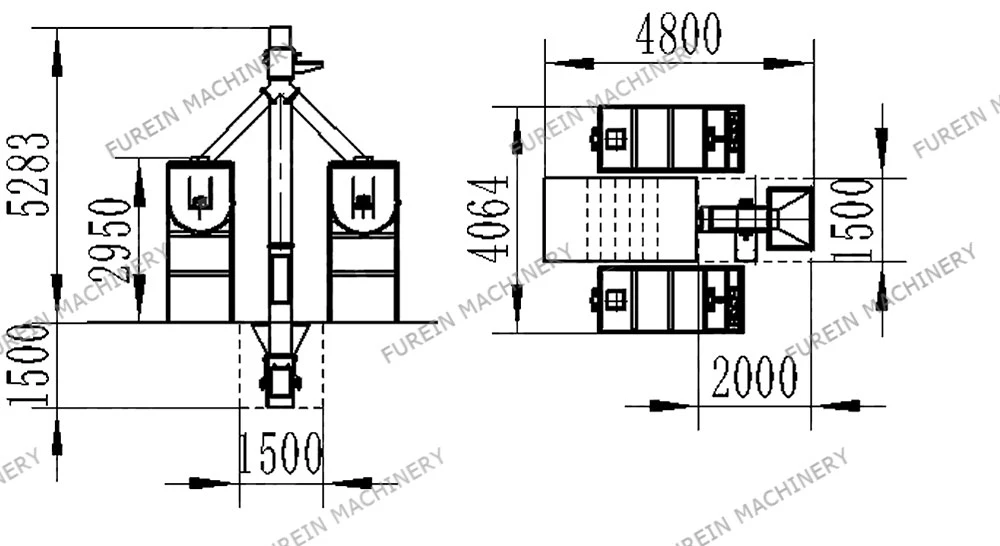
After discussing the two options, we prepared layout drawings for the customer to compare.
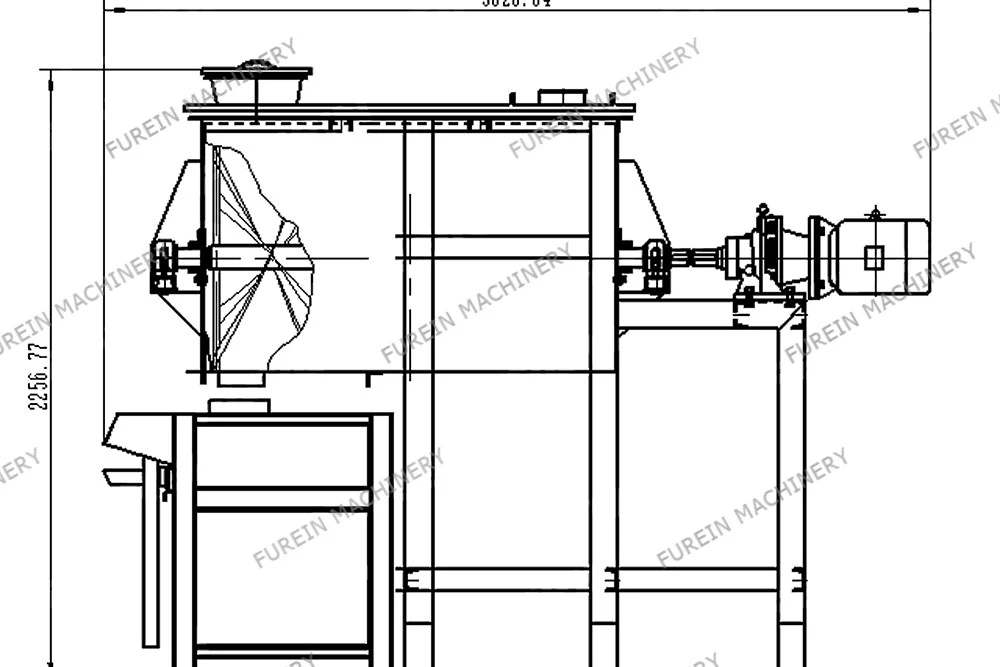
The first drawing showed one ribbon mixer connected to a packing machine. It was the more economical option and suitable for a factory producing mainly one color.
The second drawing showed one shared feeding system with two independent ribbon mixers and a valve bag packing section. Although it required an additional mixer, it better matched the customer's plan to produce white and yellow paint.
We went through the differences with the customer and explained why we preferred the second option for his particular production requirements.
After reviewing the drawings and discussing the details, the customer was very satisfied with the two-mixer arrangement and decided to proceed with it.
Equipment Delivery and Customer-Side Installation with Our Remote Support
After the equipment configuration was confirmed, the customer rented the planned workshop. The building had a wall height of approximately 9 Meter, with the highest point reaching around 11 Meter.
We then arranged equipment manufacturing and shipment. Since this was a relatively small production line, the installation work was straightforward. There was no need for us to send engineers overseas for on-site installation.
Instead, we provided the customer with an installation manual, electrical cabinet wiring diagrams and installation videos. We also offered video guidance to help his team understand the equipment connections and installation steps.
The customer completed the installation independently with our technical support. This helped avoid additional overseas installation expenses while allowing the customer to get the production line ready at his own factory.
For small-capacity production lines like this one, we believe this is a practical way to handle installation, provided the customer's team has the necessary basic installation skills and follows the technical instructions.
What Can Other New Factory Owners Learn from This Project?
One thing worth considering is that the required production capacity does not tell the whole story.
For this project, one ribbon mixer was enough for the daily production target from a capacity point of view. But the customer's plan to produce both white and yellow paint made a second mixer worthwhile.
If you only produce one color, a single mixer connected to a packing machine may be a more economical choice. If you produce different colors regularly, separate mixers can save cleaning time and make production scheduling easier.
You should also think about which equipment needs to be duplicated and which parts can be shared. In diesem Fall, we did not recommend two complete production lines. We kept the main feeding system shared and separated the mixing units.
Endlich, do not wait until the equipment is ready before thinking about your workshop. The building height, available floor area, equipment arrangement and packing position should all be checked during the early planning stage.
A suitable configuration is not necessarily the one with the most machines. It is the one that matches the products you plan to make and the way you intend to operate your factory.
Planning a Similar Thermoplastic Road Marking Paint Factory?
If you are new to thermoplastic road marking paint production, our thermoplastic road marking paint production guide explains the main production equipment, different line configurations and factors affecting equipment selection.
You can start with your expected daily output, the colors you plan to produce, your preferred bag type and the dimensions of your workshop. If you have already rented a factory, you can also send us the building drawings or site photos.
If you are still deciding between one mixer and two mixers, we can prepare different layouts and explain the differences in equipment configuration and investment.
You do not need to have every technical detail ready before contacting us. Tell us what you want to produce and how you plan to run the factory. We can discuss the equipment arrangement step by step.