
Small Tile Adhesive Making Machine Solutions
1–10 T/H Tile Adhesive Making Machines for Small and Medium Production
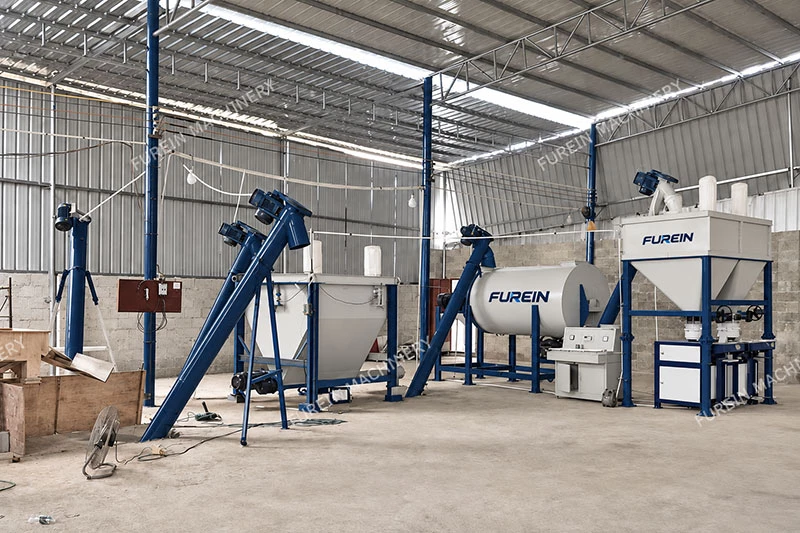
FUREIN supplies 1–10 T/H tile adhesive making machines for startups, small mortar factories and customers who need a compact and flexible production solution.
The layout of the small tile adhesive production line can be adjusted according to the available workshop height and floor space. Depending on the project, the weighing system can be installed below the mixer, in front of the mixer, or integrated into the feeding section.
The packing system can also be selected according to the customer’s bag type and required output. Open-mouth bags, valve bags and small-dose packing can all be supported with suitable packing equipment.
The goal is simple: use the space you already have, choose only the equipment you really need, and build a practical tile adhesive production system without unnecessary investment.
Kapazität ca. 10t/h
Two Capacity Options for Standard Tile Adhesive Making Machine
Choose the output that matches your current market and future production plan.
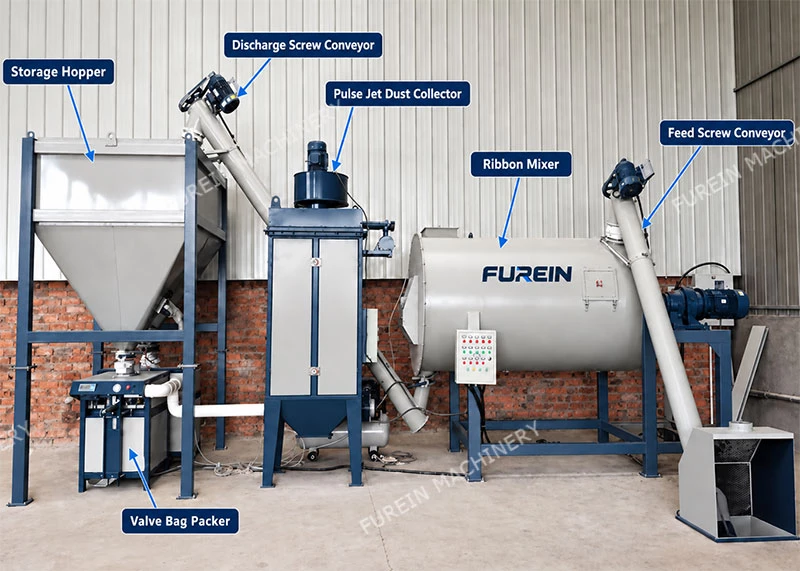
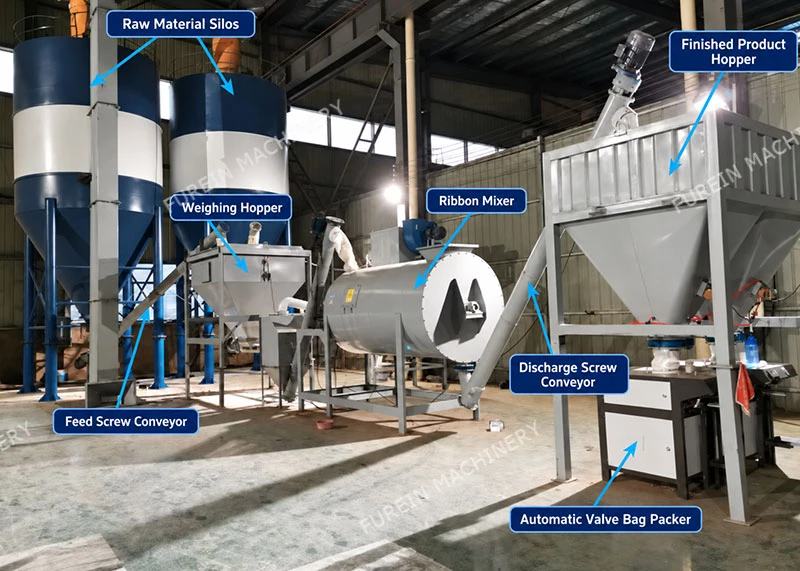
How to Choose the Right Tile Adhesive Making Machine?
The right small tile adhesive production line should be selected according to your raw materials, factory space, required capacity, bag type and preferred level of automation. For small projects, the most important point is not to use the most equipment, but to make the whole process simple, practical and easy to operate.
Choose the Feeding Method
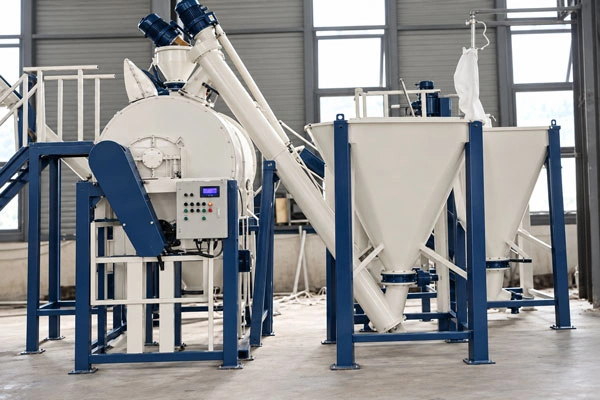
Different raw materials may require different feeding methods. Powder materials can be transferred by screw conveyor, while sand or bulk materials can also be fed by bucket elevator or hopper according to the plant layout.
Choose the Weighing Position
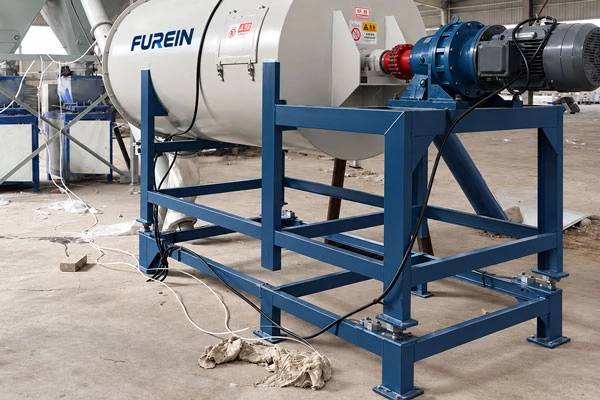
The weighing system does not have to be installed in only one position. Depending on the workshop height and equipment arrangement, the weighing hopper can be placed below the mixer, in front of the mixer, or above the mixer together with the feeding system.
Choose the Mixer
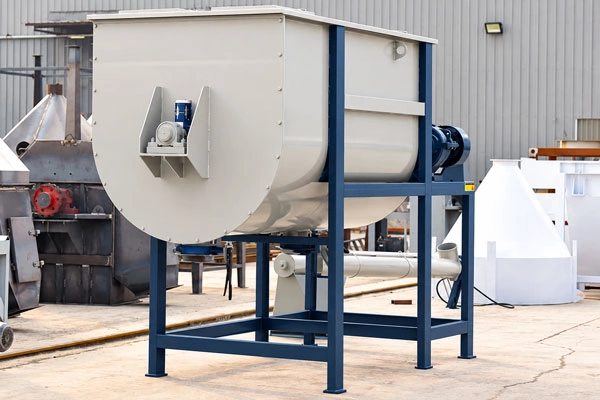
Small-capacity projects can use a ribbon mixer for a simple and economical configuration. For higher output or faster mixing, a double-shaft paddle mixer can be selected.
Choose the Packing Method
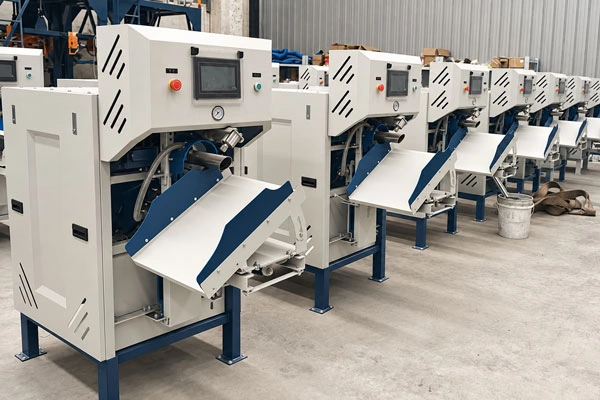
The packing machine should match the bag type, powder characteristics and required packing speed. Ventilbeutel, open-mouth bags and smaller packing sizes can all be supported with different packing equipment.
Packing Options for Small Tile Adhesive Production Lines
Different customers use different bags and packing sizes. FUREIN can match the tile adhesive packing machine to your bag type, powder characteristics and required output.
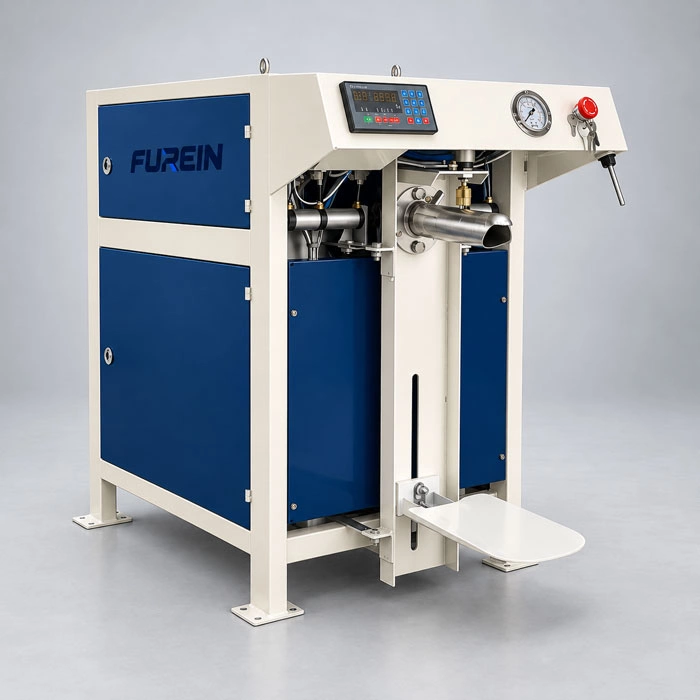
Ventilsack-Verpackungsmaschine
Commonly used for tile adhesive and other dry mortar products. Valve bags are easy to fill and do not require separate sewing after filling.
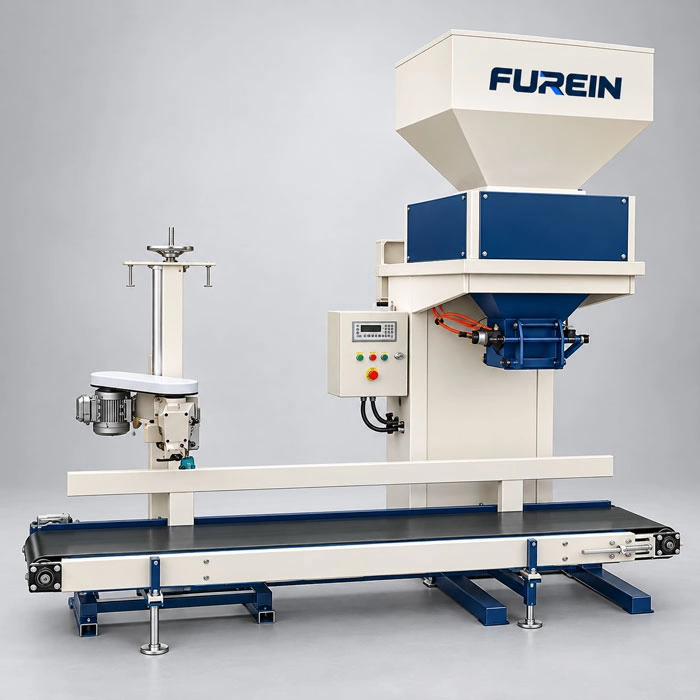
Open-Mouth Bag Packing Machine
Suitable for open-mouth bags and customers who need flexible bag sizes. The bag is placed manually and can be sealed by sewing or heat sealing depending on the bag material.
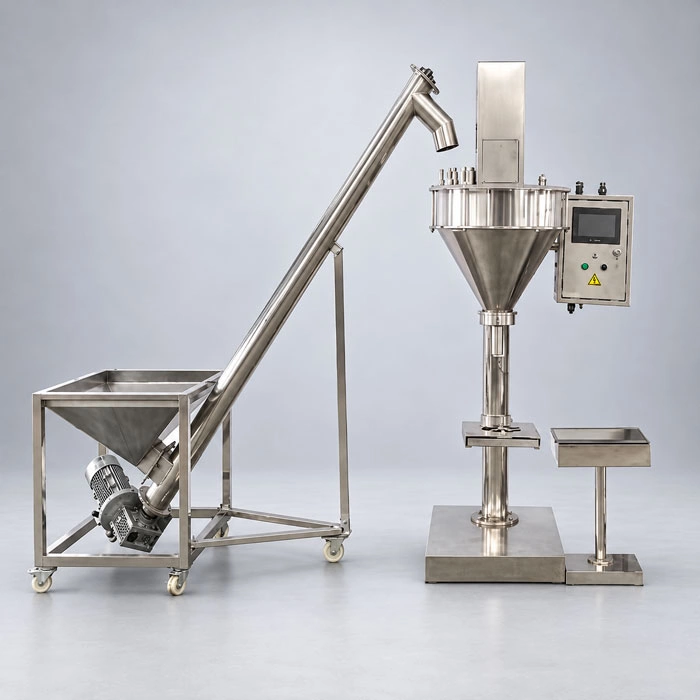
Small-Dose Packing Machine
Suitable for smaller bags or products that need lower packing weights. The configuration can be adjusted according to the required bag size and weighing range.
Small Footprint & Easy Installation
One of the main advantages of a small tile adhesive making machine is that it can be installed in a relatively compact workshop.
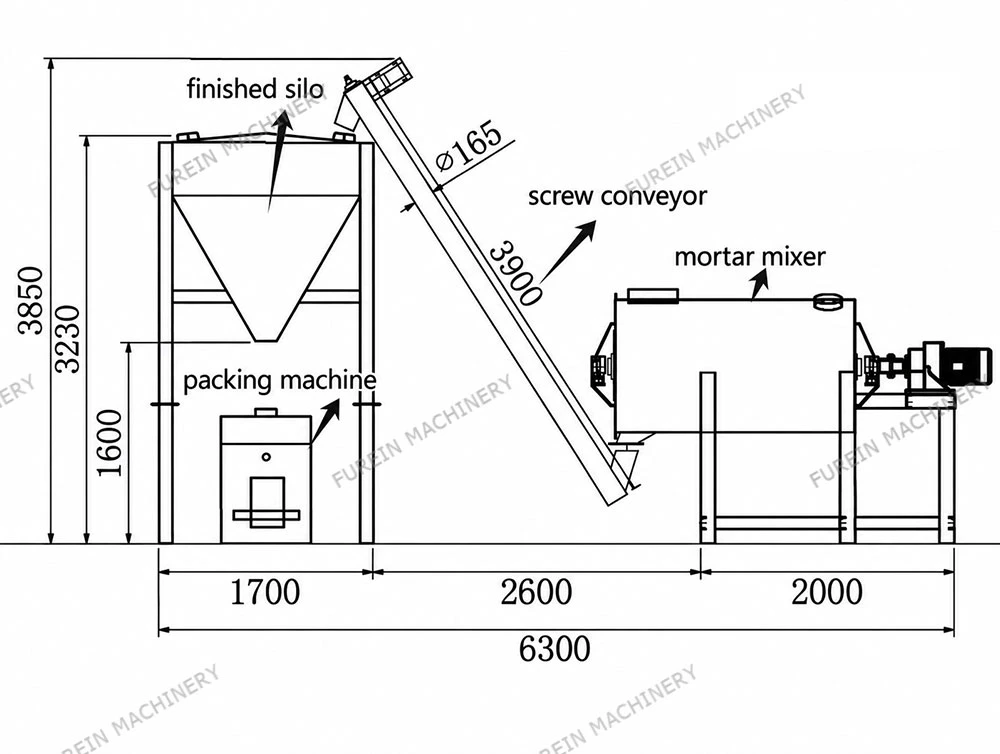
The equipment layout can be adjusted according to the available floor space and building height. For customers with an existing workshop, we can prepare a layout drawing based on the actual dimensions before production starts.
Compared with a large automatic mortar plant, a compact tile adhesive line requires less steel structure, fewer silos and a simpler installation process. This can reduce both installation time and initial investment.
Do You Need a Sand Dryer for a Small Tile Adhesive Production Line?
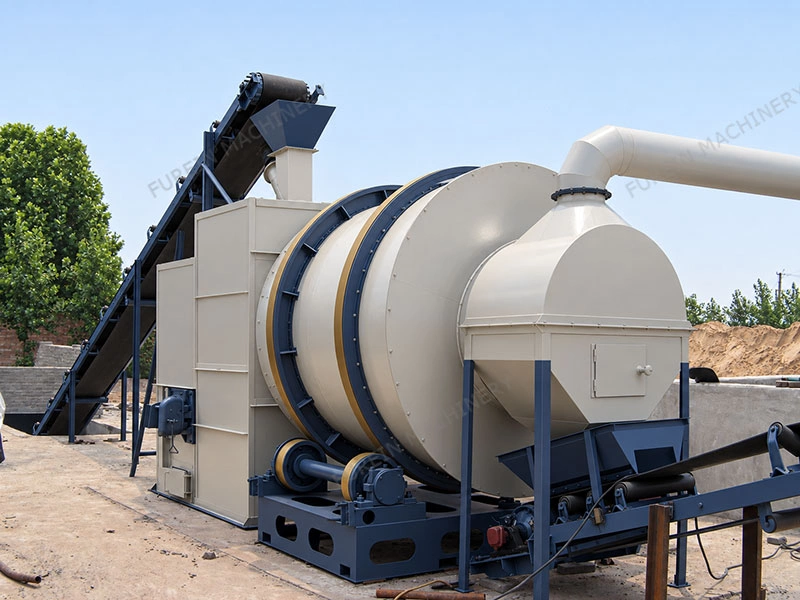
If you purchase dry graded sand, a sand dryer is normally not required.
If the sand moisture is higher than about 1%, drying may be recommended before the sand enters the tile adhesive production process. Excess moisture can affect weighing accuracy, material flow and final product stability.
For a small tile adhesive production line, the commonly selected sand dryer capacity is around 3 T/H or 5 T/H, depending on the sand moisture and required production output.
The dryer capacity should be selected according to the wet sand moisture rather than only matching the mixer capacity.
Real Layout Examples for Small Tile Adhesive Making Machines
Small tile adhesive projects often look different because customers have different workshops, raw materials and packaging methods. These project examples show how the equipment can be adjusted to different production conditions.
Many customers already have an existing workshop, limited building height or a preferred feeding method. Instead of forcing every project into the same standard layout, FUREIN adjusts the small tile adhesive machine design according to the actual site.
Based on previous projects, we have added wear-resistant liners under mixers, installed batching hoppers above mixers, changed weighing positions, adjusted feeding directions and modified packing layouts to suit different factory conditions.
3–5 T/H Tile Adhesive Line with Bottom Weighing System
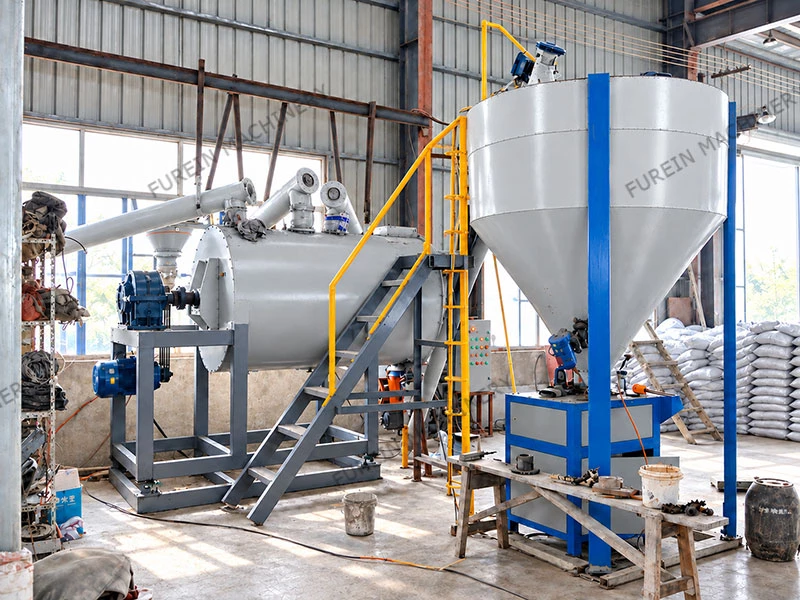
Besonderheit: Automatic Batch Weighing Under the Mixer
This 3–5 T/H small tile adhesive production line uses an outdoor cement silo and screw conveyor to feed cement directly into an O-type ribbon mixer. A weighing system is installed below the mixer to automatically weigh each batch. The required recipe can be preset in the control cabinet, helping improve batch consistency while keeping the overall layout compact.
5–6 T/H Tile Adhesive Line with Three Feeding Systems
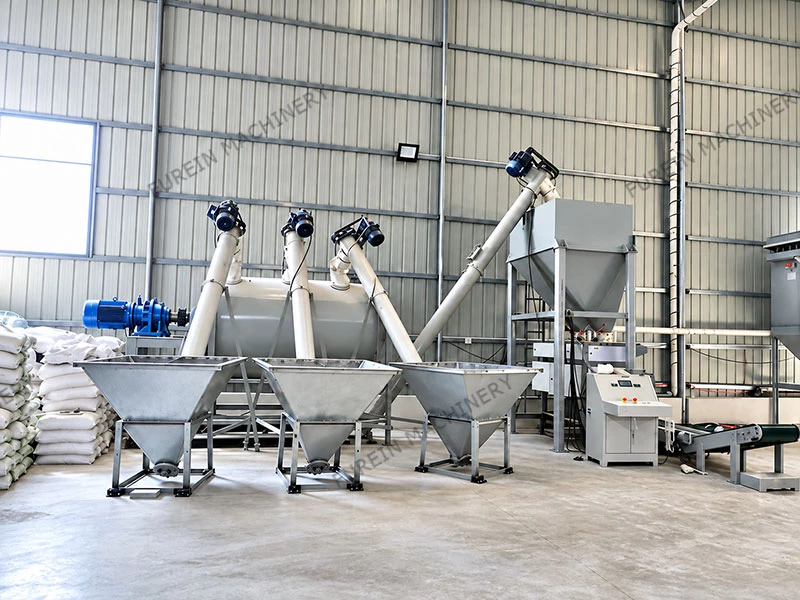
Besonderheit: Three Feeding Lines for Main Raw Materials
This 5–6 T/H tile adhesive making machine uses three separate feeding systems to transfer the main raw materials into the mixer. After mixing, the finished material is discharged from the bottom of the mixer and transferred by a second screw conveyor to the finished product hopper for packing. This layout is suitable for customers who need to handle several main raw materials in a simple and organized way.
6–8 T/H Tile Adhesive Line with Buffer Hopper
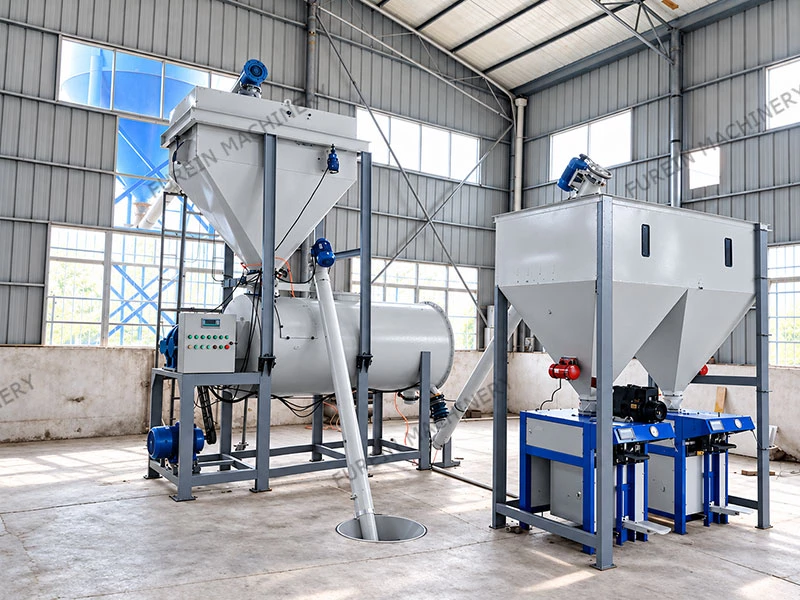
Besonderheit: Buffer Storage Above the Mixer for Faster Feeding
This 6–8 T/H small tile adhesive production line is designed to improve feeding speed. A buffer hopper is installed above the mixer to temporarily store cement and other main materials. Smaller materials can be lifted from ground level by screw conveyor and fed into the system. Two valve bag packing machines are used to improve packing efficiency and better match the mixer output.
Twin-Mixer Tile Adhesive Production Line
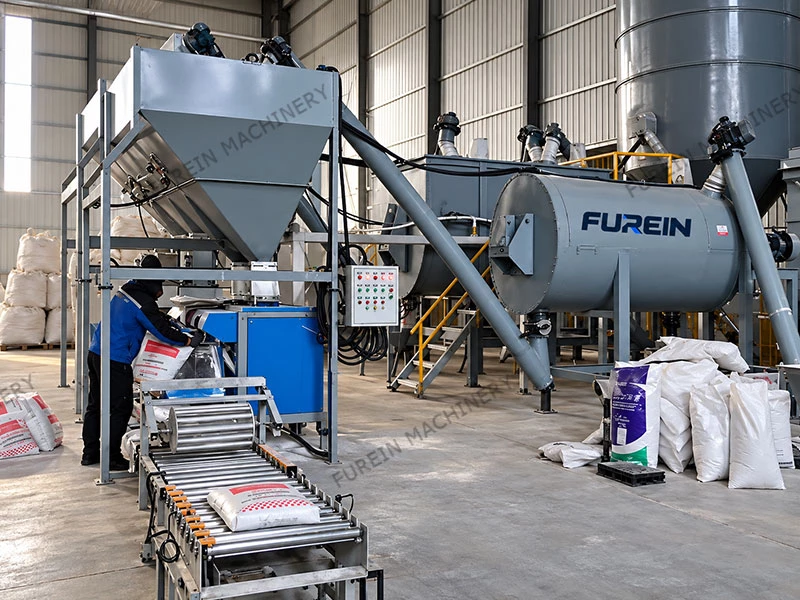
Besonderheit: O-Type and U-Type Ribbon Mixers in One Production Site
This tile adhesive production site uses two mixers: an O-type ribbon mixer and a U-type ribbon mixer. The U-type mixer provides a more stable structure for certain raw material combinations and can be selected when the production formula contains more material types. The complete line is equipped with four air packing machines to handle higher packing demand and support continuous production.
Fully Automated Small Tile Adhesive Production Line
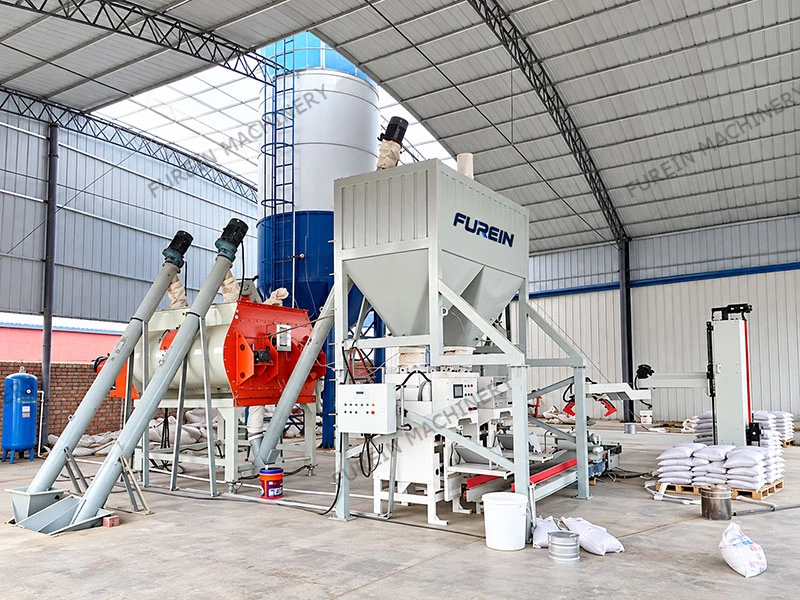
Besonderheit: Full Automation from Feeding to Palletizing
This compact small tile adhesive production line uses ground-level feeding and two material feeding lines connected to a double-shaft mixer. After mixing, the finished material is transferred by screw conveyor to a double-outlet finished product hopper and packed by two air packing machines. The packed bags are then conveyed by belt conveyor to the palletizing area and stacked automatically by a column palletizer. Although the plant is compact, it achieves a complete automated process from feeding and mixing to packing and palletizing.
2–3 T/H Standard Tile Adhesive Production Line
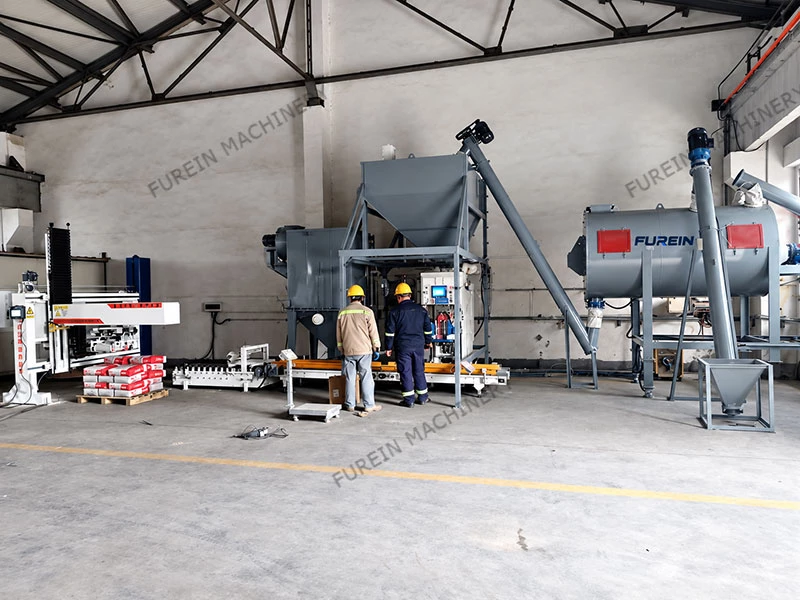
Besonderheit: Standard Compact Layout with Dust Collection and Palletizing
This 2–3 T/H small tile adhesive making machine uses ground-level feeding, with raw materials transferred by screw conveyor into the mixer. After mixing, the finished material is packed by one air packing machine. The packed bags are then conveyed through a belt conveyor and bag shaping unit to the palletizing area, where a Cartesian palletizer stacks them automatically. A pulse dust collector is also included to improve the working environment and reduce dust during production.
Verbesserte Maschine zur Herstellung von Fliesenkleber
- Die verbesserte Kapazität der Fliesenkleber-Herstellungsmaschine liegt bei 10–15 t/h.
- Die Fliesenklebermischmaschine ist eine Doppelwellenmischermaschine.
- Die Leistung kann bis zu 12t/h betragen, Geeignet für die Produktion kleiner Stückzahlen. Geringe Investition und geringer Platzbedarf.
- Als eine Reihe kleiner Maschinen zur Herstellung von Fliesenkleber installiert wurde, allgemein gesagt, Die Höhe der gesamten Maschine betrug weniger als 3,5 m, und der Fußabdruck war kleiner als 2 Quadratmeter.
- Es wurde eine Klebemischmaschine für Bandfliesen eingesetzt, und die Chargenmischzeit beträgt ca 15 Minuten pro Charge.


Maschine zur Herstellung von Fliesenkleber mit Sandtrockner
- Die Leistung der Doppelwellen-Fliesenkleber-Mischmaschine bestimmt die Leistung der Fliesenkleber-Herstellungsmaschine.
- Manchmal ist der Feuchtigkeitsgehalt von Rohstoffen höher als 5%, normalerweise, Eine Reihe von Sandtrocknungsanlagen ist so konfiguriert, dass die Feuchtigkeit des Sandes schnell getrocknet wird.
- Nach dem Trocknen, Der trocknende Sand wird über ein Förderband schnell in eine Fliesenklebermaschine zur Weiterverarbeitung gegeben.
- Sandtrockner ist der beste Partner für Maschinen zur Herstellung von Fliesenkleber.


Ja. A small tile adhesive making machine has a relatively simple structure and is easy to operate. FUREIN provides installation manuals, video guidance and installation instructions. If you still need help, our engineers can also travel to your country for on-site installation support.
A small tile adhesive production line normally needs about 2–3 workers. They mainly handle raw material feeding and bagging, including manually placing bags onto the packing machine.
The packing machine should match your bag type.
For valve bags, use a valve bag packing machine.
For open-mouth bags, use an open-mouth packing machine.
These machines normally handle bags from about 10–50 kg.
For smaller bags of around 1–10 kg, a small-dose packing machine is recommended.
It depends on your production needs. For a 1–8 T/H tile adhesive production line, an automatic weighing system can be added if large quantities of raw materials need to be weighed automatically. For additives used in small quantities, usually only tens or hundreds of kilograms for the whole production process, manual feeding is often more economical.
For a small tile adhesive production line, a ribbon mixer is usually sufficient.
A double-shaft mixer mixes faster, but the mixer speed must match the packing and storage capacity. A faster mixer alone will not increase the output of the whole production line.
For higher capacity, a double-shaft mixer can be used, but the storage and packing systems should also be upgraded.
Ja. The weighing system can be installed before the conveying system or below the tile adhesive mixer, depending on the feeding method and factory layout.
A small tile adhesive production line normally needs about 50 m² of floor space, with a workshop height of around 7 Meter. These dimensions are not fixed. FUREIN can design the layout according to your existing factory size and height.
A small tile adhesive production line normally includes:
- Fütterungssystem
- Mischsystem
- Discharge system
- Speichersystem
- Verpackungssystem
Optional equipment can include an automatic weighing system, dust collector and air compressor.
A small tile adhesive making machine usually costs about USD 3,000–8,000. The final price depends on the capacity, mixer type, Fütterungssystem, weighing system and packing machine.
Bigger capacity is not always better, and a more expensive machine is not always the right choice.
You should choose the tile adhesive making machine according to your current sales volume, expected demand and future production plan.
The capacity depends on the mixer size and the overall small tile adhesive production line configuration. Common options are: 1–2 T/H, 3–5 T/H, 5–8 T/H, and 8–10 T/H.
FUREIN can also provide tile adhesive production lines with capacities below 30 T/H.
A small tile adhesive making machine is a compact and flexible production line for small businesses or startups. Its typical capacity is 1–10 T/H, and it requires relatively little factory space.
Maschine zur Herstellung von Fliesenkleber: Der ultimative FAQ-Leitfaden
Komponenten einer automatischen Maschine zur Herstellung von Fliesenkleber?
- Abnehmbarer verschraubter Zementsilo, im Allgemeinen mit einem Becherwerk für den Außenbereich kombiniert.
- Zementsilos werden häufig zusammen mit Betonmischstationen und Trockenmörtelstationen eingesetzt, es ist abnehmbar, Wir nannten es verschraubtes Zementsilo.
- Wird hauptsächlich zur Lagerung von Schüttgütern wie Zement verwendet, Flugasche, Sand, etc.
- Der Boden des verschraubten Zementsilos ist eine zylindrische Stahlhalterung, und die Entladehöhe des Zementsilos kann an die tatsächliche Situation des Kunden angepasst werden.

Maschine zur Herstellung von Fliesenkleber
Das Mischsystem ist darauf ausgelegt, die abgemessenen Rohstoffe gründlich zu vermischen. Es umfasst normalerweise einen Mixer, B. ein Spiralbandmischer oder ein Doppelwellen-Paddelmischer, was ein gleichmäßiges und schnelles Mischen gewährleistet.
Doppelwellen-Paddel-Mischmaschine für Fliesenkleber, Normalerweise befindet sich oben ein Vormischtrichter, und der Endproduktionstrichter befindet sich unterhalb der Mischmaschine.
Die Maschine zur Herstellung von Fliesenkleber ohne Schwerkraft wird hauptsächlich für risshemmenden Mörtel verwendet, Wärmedämmmörtel, Klebemörtel, Oberflächenmörtel, Bodenmörtel und andere Pulvermaterialien mit hohen Anforderungen an die Mischgleichmäßigkeit, wie Trockenmörtel, Klebemörtel, Kittpulver, Fliesenkleber, usw.

Verpackungssystem
Sie können eine auswählen automatische Ventilverpackungsmaschine, automatische Verpackungsmaschine mit offenem Port, oder in großen Mengen, ganz nach Ihren Wünschen.
• Das Bild rechts ist ein Bild der Ventilpackmaschine, Das zeichnet sich durch schnelle Packgeschwindigkeit und hohe Wägegenauigkeit aus.
• Wenn es sich bei Ihrem Packsack um einen Ventilpacksack handelt, Dann wählen Sie die Ventilverpackungsmaschine.
• Wenn es sich bei Ihrer Tasche um eine offene Tasche handelt, Dann wählen Sie die Open-Port-Verpackungsmaschine.

Kontrollsystem
Es gibt 2 Steuerungssysteme zur Auswahl, elektrisches Steuerungssystem und SPS-Schaltschrank.
PLC ist die Abkürzung für Programmable Logic Controller.
Die Schnittstelle des SPS-Steuerungssystems ist einfach und leicht zu verstehen, leicht zu bedienen, hoch in der Automatisierung, Arbeitsersparnis und Verbesserung der Produktionseffizienz.

Entstaubungssammelsystem
Sie können zwischen einem Impulsentstauber und einem sparsamen Entstauber wählen.
Der hocheffiziente Impulsstaubabscheider kann Ihnen helfen, Staub besser zu sammeln und die Umwelt zu reinigen.
Der Beutelfilter für die Verpackungsmaschine ist wirtschaftlich und kann Ihnen helfen, Staub zu geringeren Kosten zu sammeln.

Funktionsprinzip der Maschine zur Herstellung von Fliesenkleber
Ein genaues Flussdiagramm kann Ihnen dabei helfen, den Gewinn zu erkennen und das Layout Ihrer Maschine zur Herstellung von Fliesenkleber zu verbessern.
Arbeitsprinzip: Wie in der Abbildung unten gezeigt, Der linke Teil ist die Sandtrocknungsanlage, und der rechte Teil ist die automatische Maschine zur Herstellung von Fliesenkleber.
Der Arbeitsprozess der Fliesenkleber-Herstellungsmaschine ist wie folgt: Erste, um Material zum Außenbecherwerk hinzuzufügen, Das Material wird bis zum Zementsilo geliefert Becherwerk, Der Boden des Zementsilos verfügt über eine Förderschnecke, das Material durch die Förderschnecke zum Innenbecherwerk, Anschließend gelangt das Material in den Vormischtrichter und wartet auf das Mischen, Anschließend wird das Material zum Mischen zum Doppelwellen-Trockenmörtelmischer gefördert, Das gemischte Bohrlochmaterial gelangt in das Lager für fertige Produkte, Es gibt ein Packsystem, Eine automatische Ventilbeutelverpackungsmaschine verpackt das fertige Produkt in Beutel.
Parameter der Maschine zur Herstellung von Fliesenkleber

Die Leistung der einfachen Maschine zur Herstellung von Fliesenkleber umfasst 1-2T/H, 3-4T/H, 5-6T/H und 6-8T/H.
Die Leistung der automatischen Fliesenkleberanlage beträgt 10-15t/h, 15-25 t/Std, 25-35 t/Std, und das Maximum erreichen kann 100 t/Std.
Wenn Sie eine spezifische Liste für die Maschine zur Herstellung von Fliesenkleber erhalten möchten, oder maßgeschneiderte Lösungen, Sie können uns gerne kontaktieren.
Was ist die Kapazität einer Maschine zur Herstellung von Fliesenkleber??
Allgemein gesagt, Die Leistung der Fliesenkleberherstellungsmaschine beträgt 0,5 t/h bis 100 t/h.
Die kleine Maschine zur Herstellung von Fliesenkleber verwendet eine Dreischichtband-Fliesenkleber-Mischmaschine und ihr Prozessbereich ist:0.5t/h zu 8 t/Std.
Wenn Sie eine kleine Maschine zur Herstellung von Fliesenkleber mit einer Kapazität von bis zu 10 t/h benötigen, das ist in Ordnung. Kontaktieren Sie uns, um jetzt eine Lösung zu erhalten.
Die Fliesenklebeanlage mit schwerelosem Mörtelmischer mit Doppelwelle hat eine Leistung von 8 t/h bis 60 t/h. Wenn Sie eine Leistung von 100 t/h oder 150 t/h erreichen möchten, es ist kein Problem, Bitte kontaktieren Sie uns für maßgeschneiderte Lösungen.
Mit einer Reihe von Maschinen zur Herstellung von Fliesenkleber kann nicht nur Fliesenkleber hergestellt werden, sondern auch andere Trockenmörtel herstellen, also können wir es nennen Trockenmörtelmaschine, Werk für Trockenmörtel, Produktionslinie für Trockenmörtel, Produktionsstätte für Fliesenkleber, Maschine zur Herstellung von Wandspachtel, Fertigputzanlage, etc.
Vorteile der Verwendung einer Maschine zur Herstellung von Fliesenkleber:
Erhöhte Effizienz: Die Automatisierung und Integration verschiedener Komponenten in die Maschine reduziert den manuellen Arbeitsaufwand und erhöht die Produktionseffizienz.
Gleichbleibende Qualität: Die Maschine gewährleistet ein gleichmäßiges Mischen und eine genaue Messung der Rohstoffe, Das Ergebnis sind hochwertige Fliesenkleber.
Anpassungsoptionen: Das Steuerungssystem ermöglicht eine flexible Anpassung der Klebstoffformulierungen, Erfüllung spezifischer Anforderungen verschiedener Projekte.
Einsparmaßnahmen: Durch die eigene Produktion von Fliesenklebern, Bauunternehmen können im Vergleich zum Kauf vorgefertigter Klebstoffe Kosten sparen.
Abschließend, Eine Fliesenklebermaschine ist ein unverzichtbares Werkzeug zur Herstellung hochwertiger Fliesenkleber. Es ermöglicht eine effiziente, konsistent, maßgeschneiderte Fertigung, Bereitstellung zuverlässiger und langlebiger Verbindungslösungen für Bauprojekte.


