โรงงานผลิตกาวติดกระเบื้อง
Complete Production Lines for Tile Adhesive, Tile Glue and Cement-Based Dry Mortar
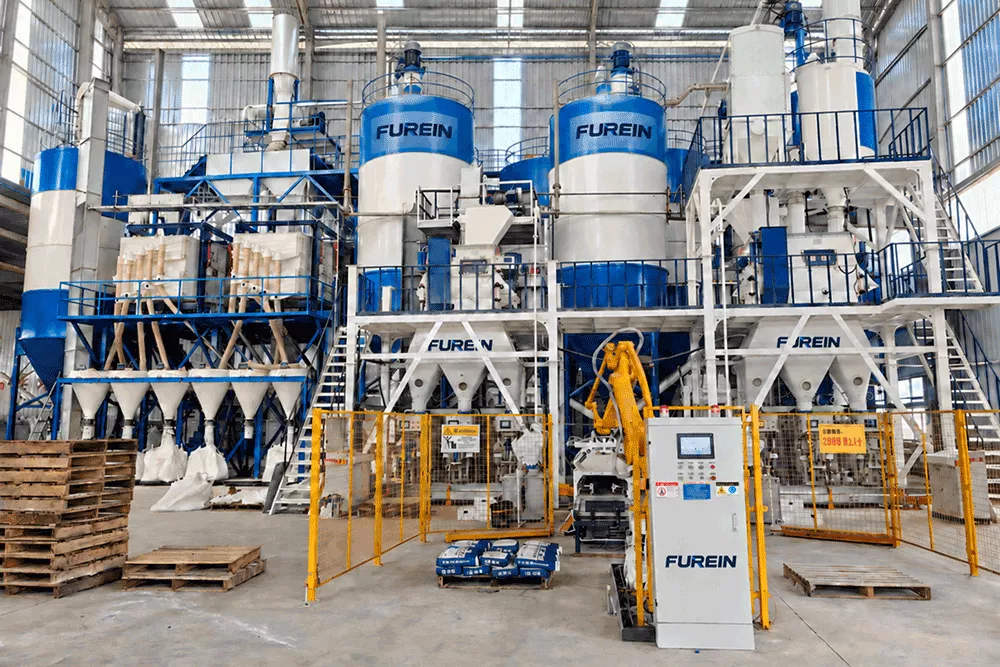
FUREIN designs and manufactures complete tile adhesive production lines for medium and large-scale production. From raw material storage, automatic weighing and chemical additive dosing to mixing, packing and palletizing, each plant is configured according to your formula, required capacity, factory conditions and automation level.
5–30+ T/H
Flexible Capacity
Automatic Batching
Accurate Formula Control
Micro Additive Dosing
Complete Process
การบรรจุ & Palletizing
Turnkey Engineering
What Is a Tile Adhesive Manufacturing Plant?
A tile adhesive manufacturing plant is a complete production system used to store, weigh, dose, mix and pack cement, dried sand, fillers and chemical additives according to a preset formulation.
Unlike a compact tile adhesive making machine, a complete plant usually includes raw material silos, แบทช์อัตโนมัติ, additive dosing, high-efficiency mixing, finished product storage, dust collection, packing and optional palletizing systems. It is designed for customers who need higher production capacity, better automation and more stable batch consistency.
Looking for a compact 1–10 T/H solution?
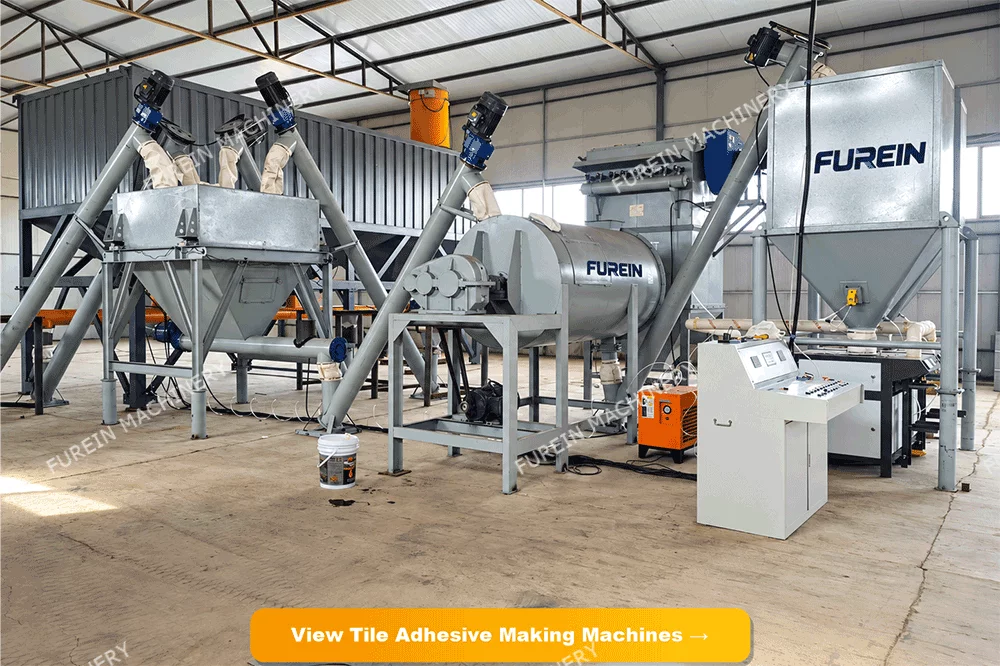
Choose Your Tile Adhesive Production Line
ในฐานะซัพพลายเออร์โรงงานผลิตกาวติดกระเบื้องแบบมืออาชีพ, เรายึดมั่นในความเชื่อเสมอมา: คุณภาพชั้นหนึ่ง, บริการระดับมืออาชีพ, เทคโนโลยีชั้นนำ. สิ่งนี้ช่วยให้เราได้ลูกค้าประจำจำนวนมาก, และที่นี่, we'll show you how to choose the right tile adhesive manufacturing plant.
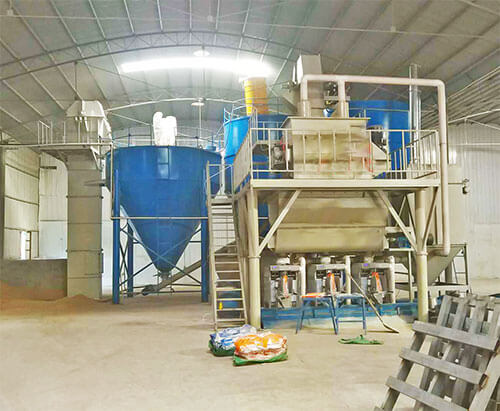
โรงงานผลิตกาวติดกระเบื้องกึ่งอัตโนมัติ
A practical solution for medium production volumes. The plant can include semi-automatic raw material feeding, a double-shaft mixer and valve bag packing machine.
| ความจุ | 5-10t/h Tile Adhesive Production Line |
|---|---|
| มิกเซอร์รุ่น | เครื่องผสมกาวกระเบื้องเพลาคู่ |
| พลังมิกเซอร์ | 5.5-15กิโลวัตต์ |
| ระบบควบคุม | กึ่งอัตโนมัติพร้อมตู้ควบคุมไฟฟ้า |
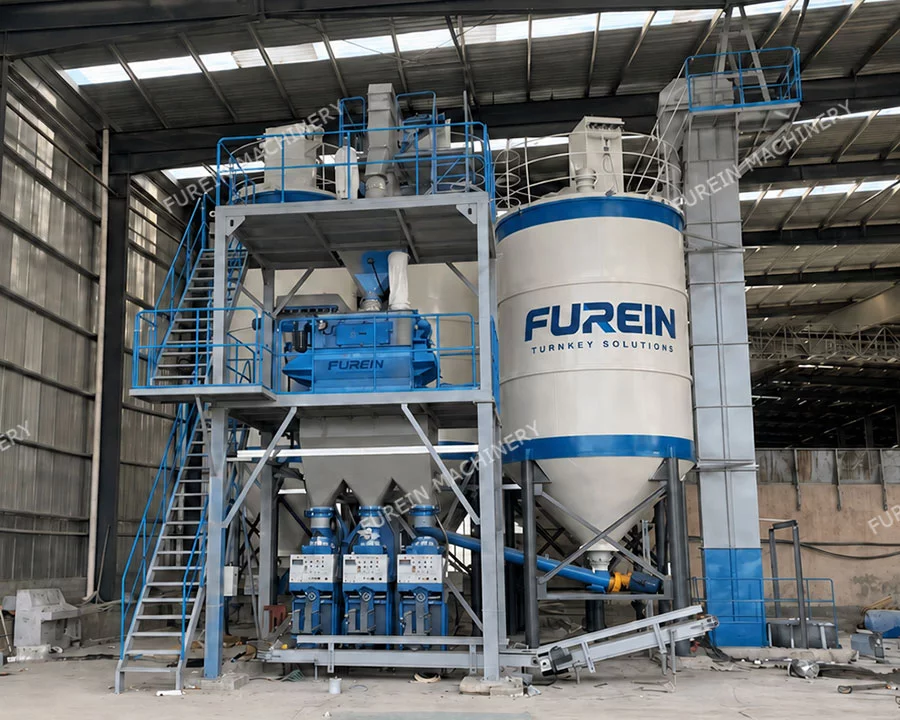
Medium Automatic Tile Adhesive Plant
Designed for continuous commercial production with multiple raw materials, automatic batching and higher packaging efficiency. The system can be configured to produce tile adhesive together with wall putty, skim coat and other cement-based dry mortar products.
| ความจุ | 10–20 T/H Automatic Tile Adhesive Plant |
|---|---|
| มิกเซอร์รุ่น | เครื่องผสมกาวกระเบื้องเพลาคู่ |
| กำลังทั้งหมด | 45-65กิโลวัตต์ |
| ระบบควบคุม | Automatic weighing and packing with PLC contol |
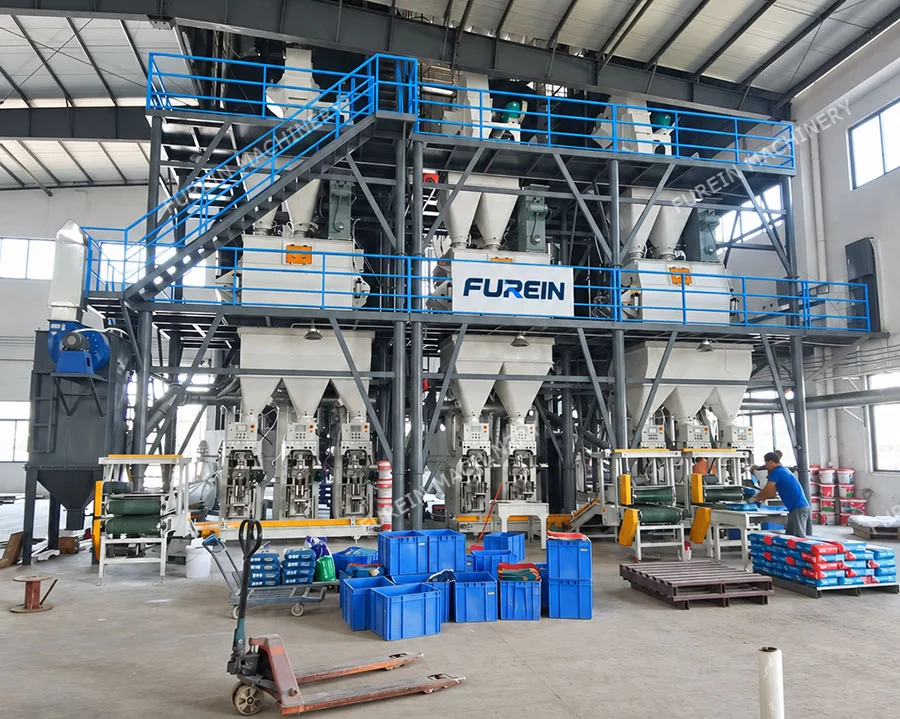
Large / Tower-Type Tile Adhesive Manufacturing Plant
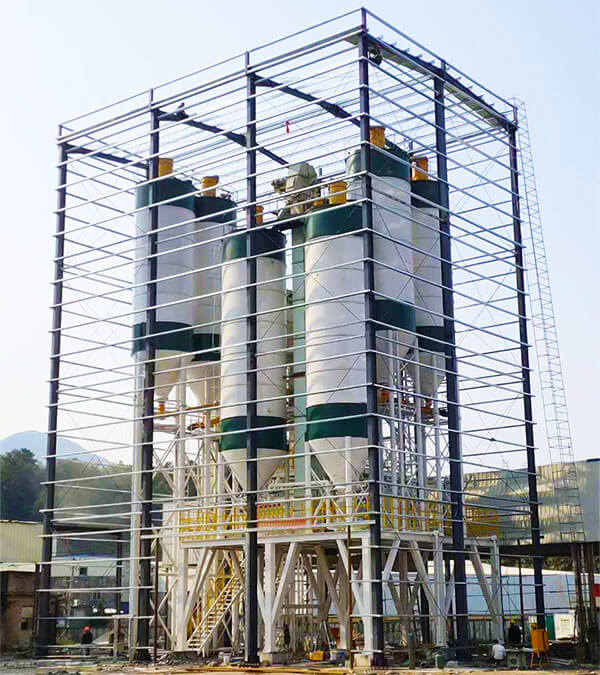
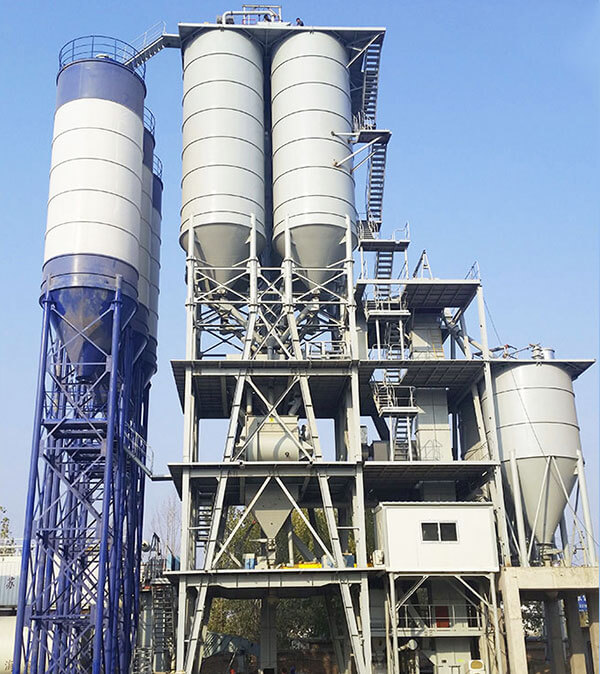
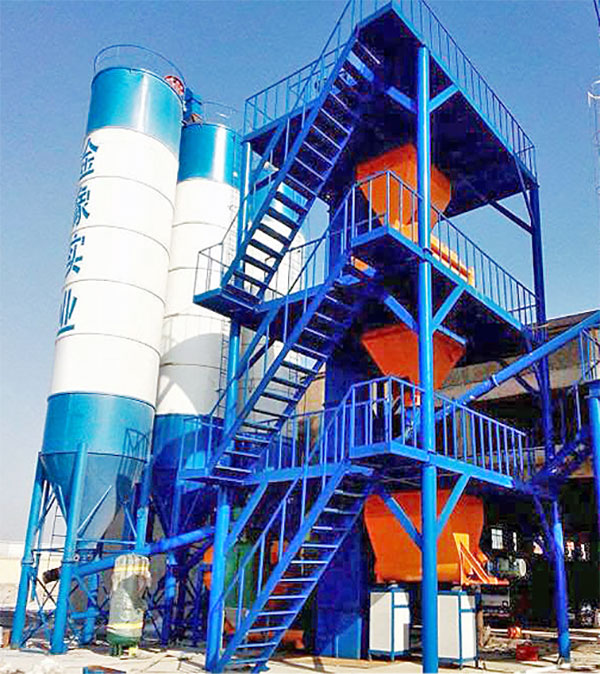
A vertically arranged plant for higher output and greater automation. Raw materials flow through storage, ชั่งน้ำหนัก, mixing and packing sections with fewer intermediate transfers, making the system suitable for industrial-scale production.
| ความจุ | 20–30+ T/H Tower-Type Tile Adhesive Manufacturing Plant |
|---|---|
| มิกเซอร์รุ่น | M3000, M4000 |
| พลังมิกเซอร์ | 20-30กิโลวัตต์ |
| ระบบควบคุม | Fully automatic with PLC control system, all in one. |
Which Plant Is Right for You?
| Project | 5-10 ไทย | 10-20 ไทย | 20-30ไทย |
|---|---|---|---|
| Best for | Growing producers | Commercial factories | Industrial production |
| Main material feeding | Automatic | Automatic | Fully Automatic |
| Additives Dosing | Manual / Optional | Semi /Automatic | Automatic micro-dosing |
| มิกเซอร์ | Double shaft mixer | Zero-gravity mixer | Industrial paddle mixer or plough mixer |
| การบรรจุ | 1-2 packing machines | 2-3 packers | Multiple packing lines |
| Palletizing | Optional | Optional | Recommended |
| Factory height suggestion | 6-10ม | 10-15ม | 13-20ม |
| Automation | ปานกลาง | High | High |
Not sure which configuration fits your project? Start with your target capacity, products and factory dimensions.
Complete Tile Adhesive Manufacturing Process
โรงงานผลิตกาวติดกระเบื้องโดยทั่วไปใช้ 3-6 ไซโลวัตถุดิบ, โดยใช้ไซโลขนาดใหญ่สองไซโลเก็บวัสดุ เช่น ผงแคลเซียม, และไซโลขนาดเล็กที่เหลือจะใช้เก็บแคลเซียมชนิดเบา, แคลเซียมหนัก, ทราย, วัสดุขนาดเล็ก, ฯลฯ. แคลเซียมเบา, แคลเซียมหนัก, ทราย, วัสดุขนาดเล็กและอื่น ๆ จำเป็นต้องใช้ลิฟต์ถังลิฟต์เข้าไปในไซโลขนาดเล็ก, ระบบกระจายวัสดุที่ชาญฉลาดเพื่อรองรับการทำงานประเภทการกระจายลิฟต์ถัง, เพื่อหลีกเลี่ยงการสูญเสียทรัพยากร.
ระบบชั่งน้ำหนัก, ด้วยความร่วมมือของสกรูลำเลียง, ถ่ายโอนวัตถุดิบในไซโลไปยังถังชั่งน้ำหนัก, และตระหนักถึงการชั่งน้ำหนักของวัตถุดิบผ่านการป้อนกลับข้อมูลของเซ็นเซอร์. วัสดุของหลุมชั่งน้ำหนัก, ผ่านตัวนำสกรูลำเลียงเข้าสู่เครื่องฝากข้อมูลหลัก, ยกไปที่เครื่องผสมปูนแห้งเพื่อผสมในไซโล. เครื่องผสมปูนแห้งเป็นแบบประตูเปิดลม, ซึ่งสามารถใส่วัสดุที่จะผสมลงในเครื่องผสมแบบไร้น้ำหนักได้อย่างรวดเร็ว เพื่อให้สามารถผลิตกาวติดกระเบื้องได้อย่างต่อเนื่อง.
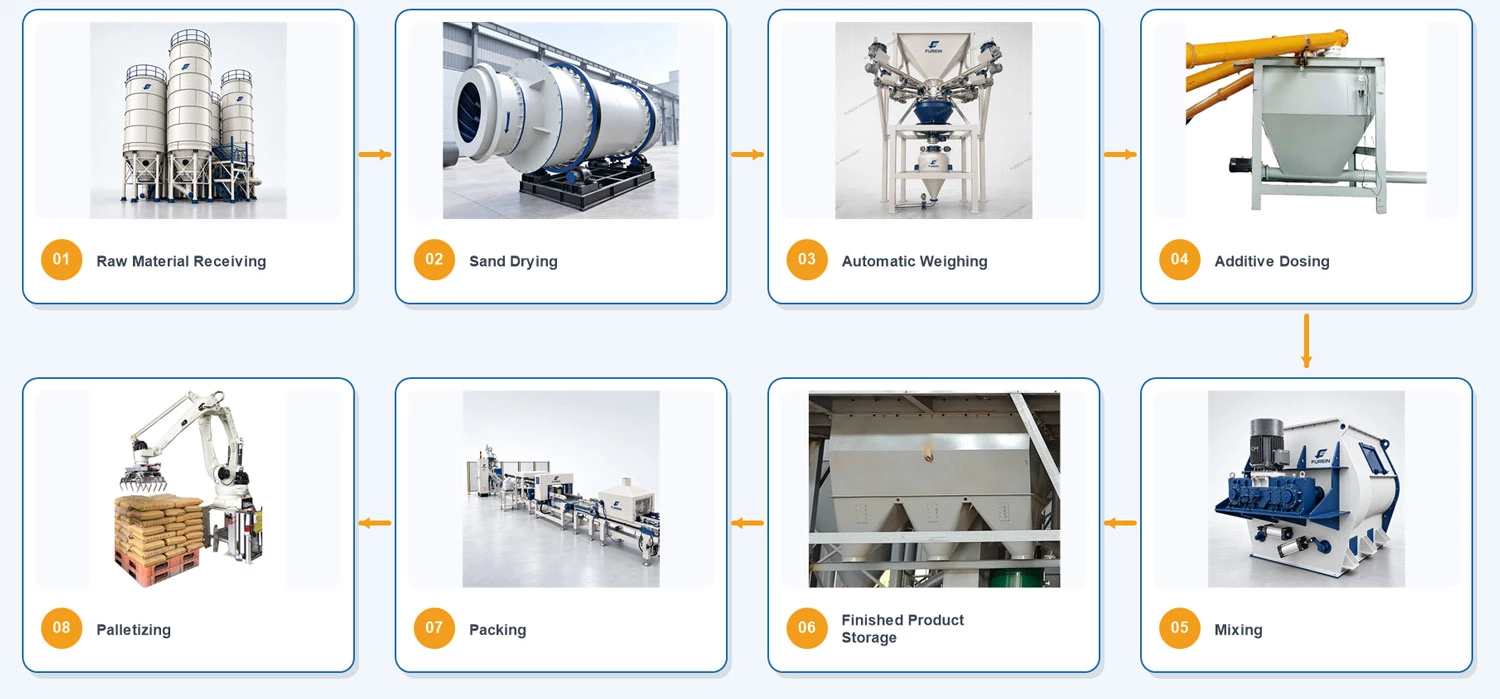
ชิ้นส่วนหลักของเครื่องผลิตกาวกระเบื้องอัตโนมัติ
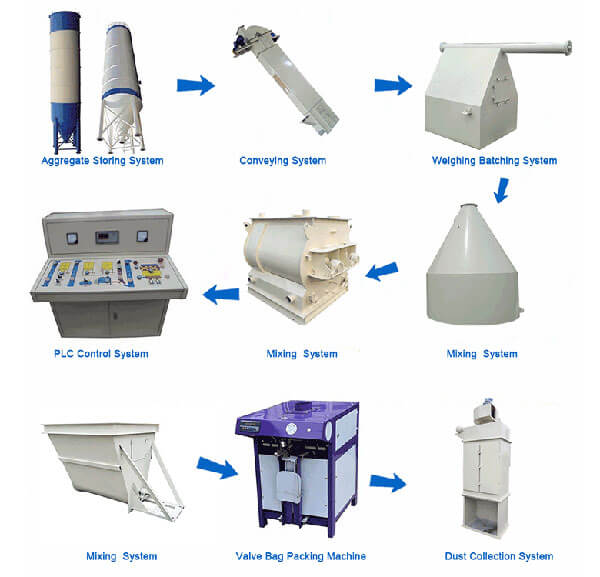
เครื่องผลิตกาวกระเบื้องเซรามิกสำหรับจัดเก็บวัตถุดิบขนาดใหญ่, โดยทั่วไปใช้การออกแบบถัง, โดยใช้การให้อาหารรถบรรทุกถัง. ระหว่างการก่อสร้างโครงการ, ต้องการถังเก็บวัตถุดิบขนาดเล็กเพียงสองถังเท่านั้นในการจัดเก็บวัตถุดิบขนาดเล็ก.
2. ระบบแบทช์และชั่งน้ำหนัก
ประกอบด้วยเครื่องชั่งน้ำหนักถัง, มังกรน้ำท่วม, อุปกรณ์คายประจุ, อุปกรณ์เพิ่มวัสดุขนาดเล็กและระบบควบคุมด้วยคอมพิวเตอร์. ตามสูตรสามารถวัดอัตโนมัติของวัตถุดิบที่แตกต่างกัน, ลดความเข้มของแรงงานและมลภาวะต่อสิ่งแวดล้อม, ยังมั่นใจในคุณภาพผลิตภัณฑ์ของกาวกระเบื้องเซรามิก.
3. เครื่องผสมปูนแห้ง
เครื่องผสมกาวปูกระเบื้องมีให้เลือกมากมาย, เช่นเครื่องผสมสายพานเปลือยสามชั้น, เครื่องผสมไถ, เครื่องผสมปูนแห้งเพลาคู่, ฯลฯ.
ข้อกำหนดของเครื่องผสมกาวกระเบื้องคือการผสมแบบสม่ำเสมอ, ไม่มีมุมตาย, ประสิทธิภาพสูง, อุปกรณ์ที่ทนต่อการสึกหรอ, ความเร็วในการขนถ่ายที่รวดเร็ว.
ขอแนะนำให้ใช้เครื่องผสมเพลาคู่แบบไร้น้ำหนัก, ซึ่งเป็นเครื่องผสมผงแห้งที่ได้รับความนิยมสูงสุด.
เครื่องผสมไถเหมาะสำหรับการผสมวัสดุไฟเบอร์และของเหลว.
4. เครื่องบรรจุ
ถุงบรรจุมีสองประเภท: ถุงเปิดและถุงวาล์ว. ในกระบวนการผลิตกาวปูกระเบื้อง, เครื่องบรรจุพอร์ตวาล์วถูกนำมาใช้มากขึ้น, ไม่จำเป็นต้องเย็บ, ต้องการการดำเนินการเพียงคนเดียวเท่านั้น, แต่เครื่องบรรจุภัณฑ์นี้ไม่เหมาะสำหรับการบรรจุวัสดุที่มีน้ำหนักเบา, ราคาของกระเป๋าจะสูงขึ้นเล็กน้อย, แต่ความเร็วในการบรรจุนั้นรวดเร็ว.
5. เก็บฝุ่น
ใช้ดูดฝุ่นในเครื่องยาแนวกระเบื้อง, ดีต่อการรักษาสิ่งแวดล้อม. โดยทั่วไปจะอยู่ที่ด้านบนของไซโลซีเมนต์, พอร์ตป้อนของลิฟต์ฝากข้อมูล, พอร์ตบรรจุภัณฑ์ของเครื่องบรรจุภัณฑ์, ฯลฯ.
6. โครงสร้างการลำเลียงและการยก
การขนส่งวัสดุในสายการผลิตคือ: การขนส่งในแนวราบและการขนส่งในแนวดิ่ง, การขนส่งในแนวราบสามารถใช้สกรูลำเลียงได้, โดยทั่วไปแล้วการขนส่งในแนวตั้งจะนำมาใช้ ลิฟท์ถัง.
Raw Materials for Tile Adhesive Production
Tile adhesive generally contains cement, dried graded sand, fillers and several low-ratio chemical additives. Because some additives represent only a small percentage of the total formula, accurate weighing and uniform distribution are important for consistent finished-product performance.
Why Additive Dosing Matters
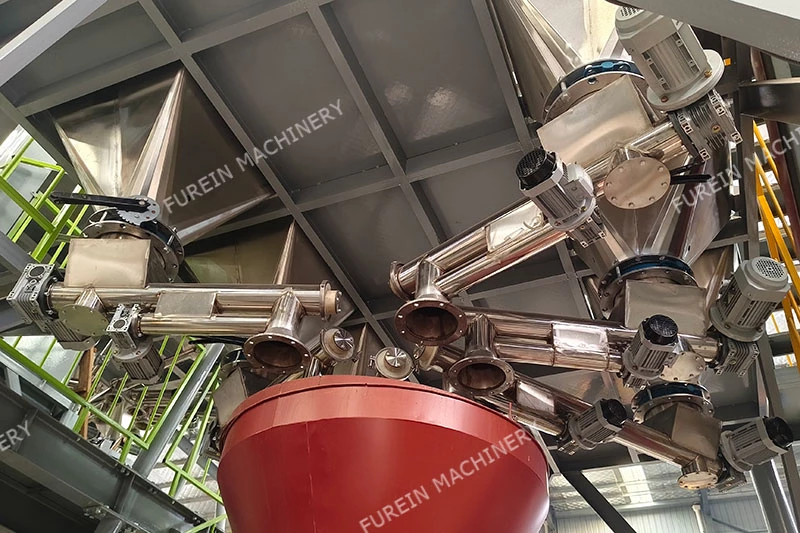
In tile adhesive formulations, some additives are used at very low dosage levels. When the required amount is only a few kilograms per batch, even a small weighing error can create a relatively large percentage deviation.
For small tile adhesive plants, additives can be pre-weighed and added manually. This keeps the equipment simple and reduces the initial investment.
For medium and large automatic tile adhesive production lines, an automatic micro-dosing system can weigh and feed low-percentage additives according to the preset formula. This reduces manual dosing errors, improves batch repeatability and makes frequent recipe changes easier to manage.
Choosing the Right Mixer for a Tile Adhesive Production Line
The mixer should be selected according to the formulation, batch size and required mixing quality—not simply by choosing the largest motor or vessel.
Double-Shaft Paddle Mixer
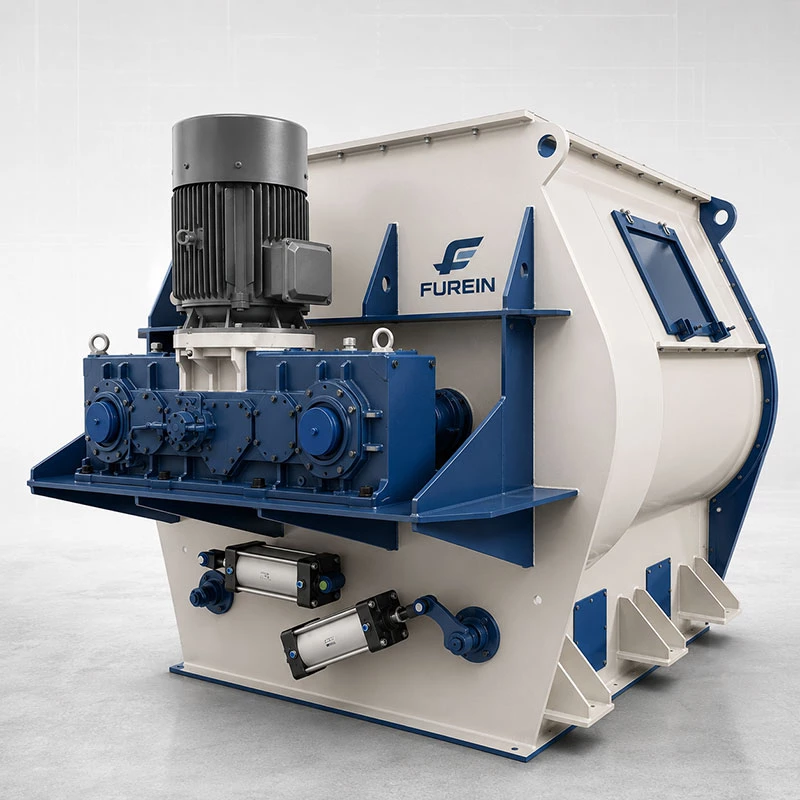
Suitable for most commercial tile adhesive plants because of its fast mixing speed, high uniformity and short discharge cycle.
Ploughshare Mixer
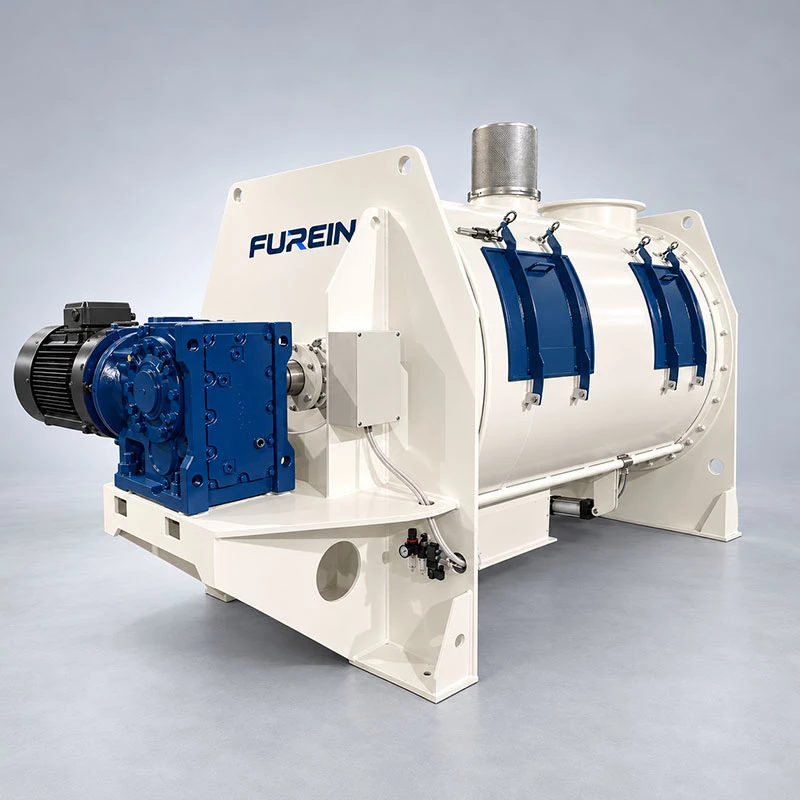
Recommended when the formulation contains fibers, liquids or materials requiring stronger dispersion.
Do You Need a Sand Dryer?
Sand moisture and required dry sand output should be confirmed before dryer selection.
Purchased Dry Sand
No Dryer Required
If dry graded sand with stable moisture is available locally, the plant can be simplified and the initial investment reduced.
Wet Natural Sand
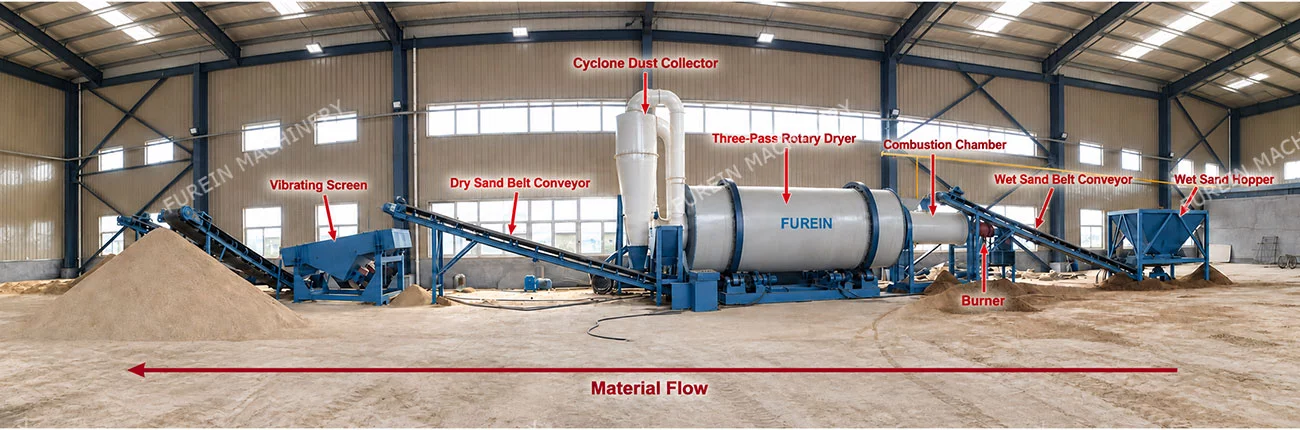
การอบแห้ง & Screening Required
If river sand or other wet natural sand is used, a rotary dryer and screening system are normally installed before the storage section. In a tile adhesive manufacturing plant, a sand drying line is required if the moisture content of the wet sand exceeds 0.5%.
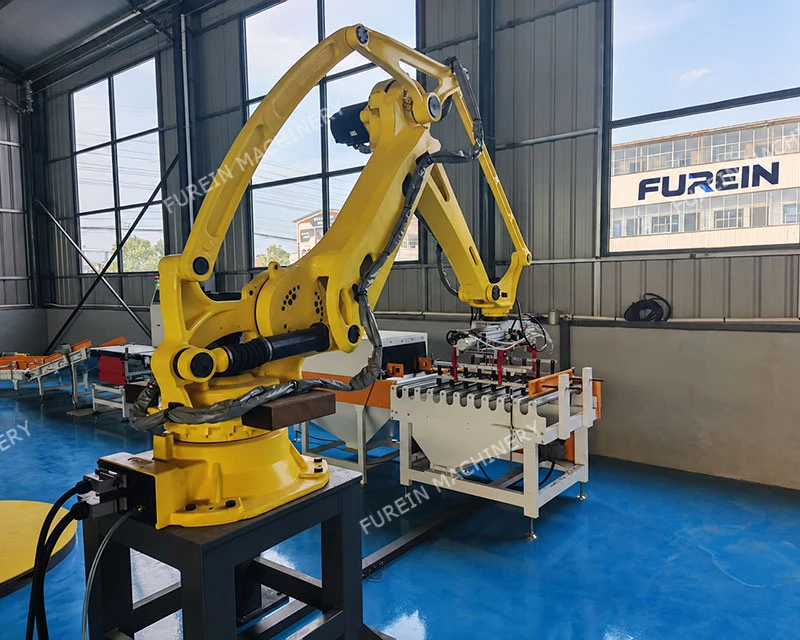
ฉันควรเลือกอัน เครื่องจัดเรียงพาเลทอัตโนมัติ?
ในฐานะที่เป็นกระเบื้องที่มีประสบการณ์ การทำกาว ผู้ผลิตเครื่อง, เราแนะนำให้เลือกเครื่องจัดเรียงพาเลทอัตโนมัติหากผลผลิตของคุณสูงกว่า 10 ตัน/ชม, ซึ่งเพิ่มผลผลิตและประหยัดค่าแรง. อย่างไรก็ตาม, เพื่อรับประกันคุณภาพของผลิตภัณฑ์, เราต้องเลือกซัพพลายเออร์ที่เชื่อถือได้และขอคำแนะนำจากเรา.
Every Tile Adhesive Production Line Design Starts with the Right Layout
Before equipment manufacturing begins, we review the required products, สูตร, plant capacity, วัตถุดิบ, factory dimensions, automation level and local operating conditions.
Our engineers then prepare the production process, equipment configuration and plant layout. The goal is not simply to fit all machines into the building. The tile adhesive plant layout should make material flow smoother, reduce unnecessary transfer, leave enough maintenance space and make future operation easier.
Process Design
From raw material receiving to finished bag.
2ดี / 3D Plant Layout
Designed according to actual factory dimensions.
Installation Planning
Positions, elevations and interfaces prepared in advance.
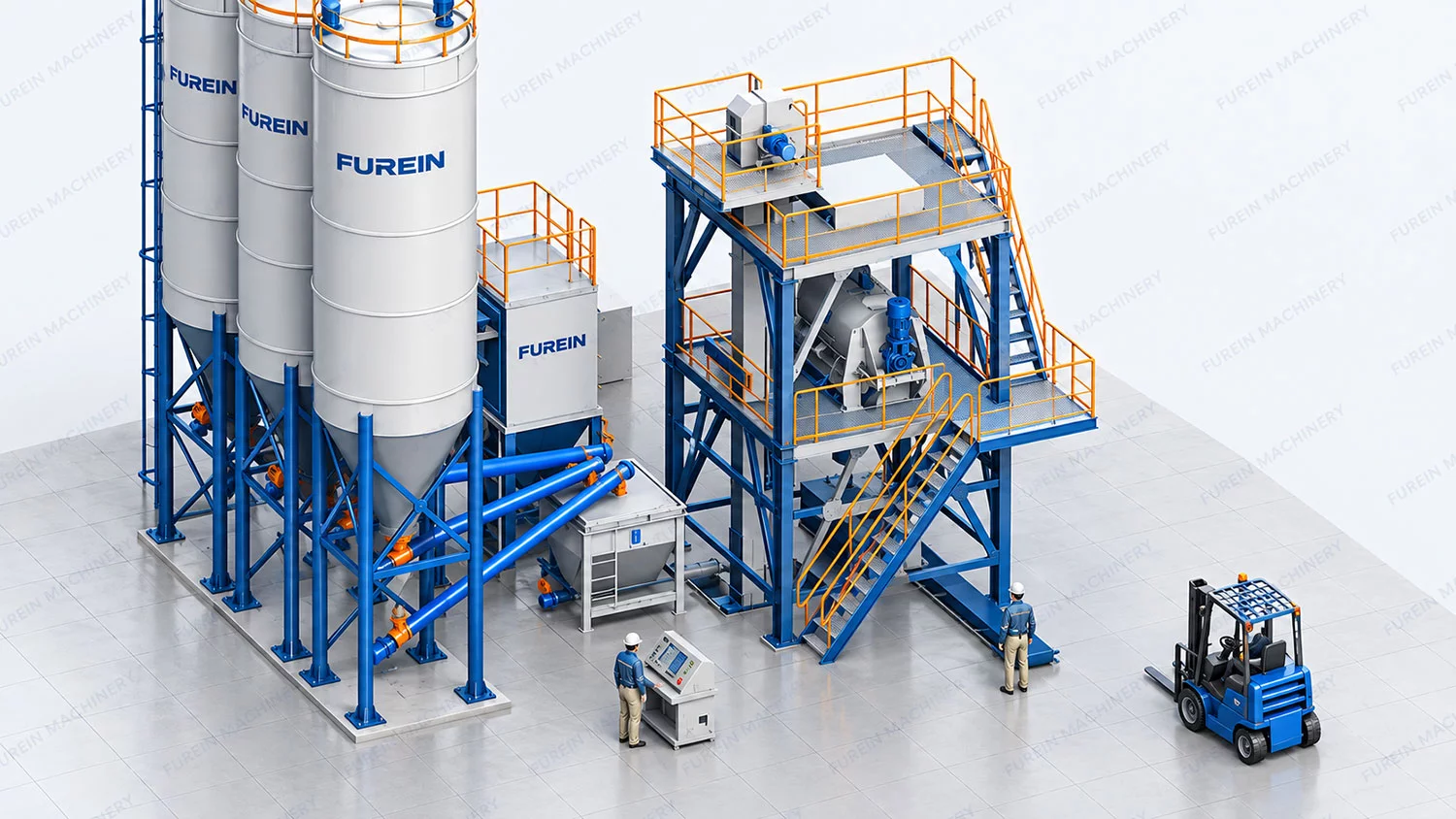
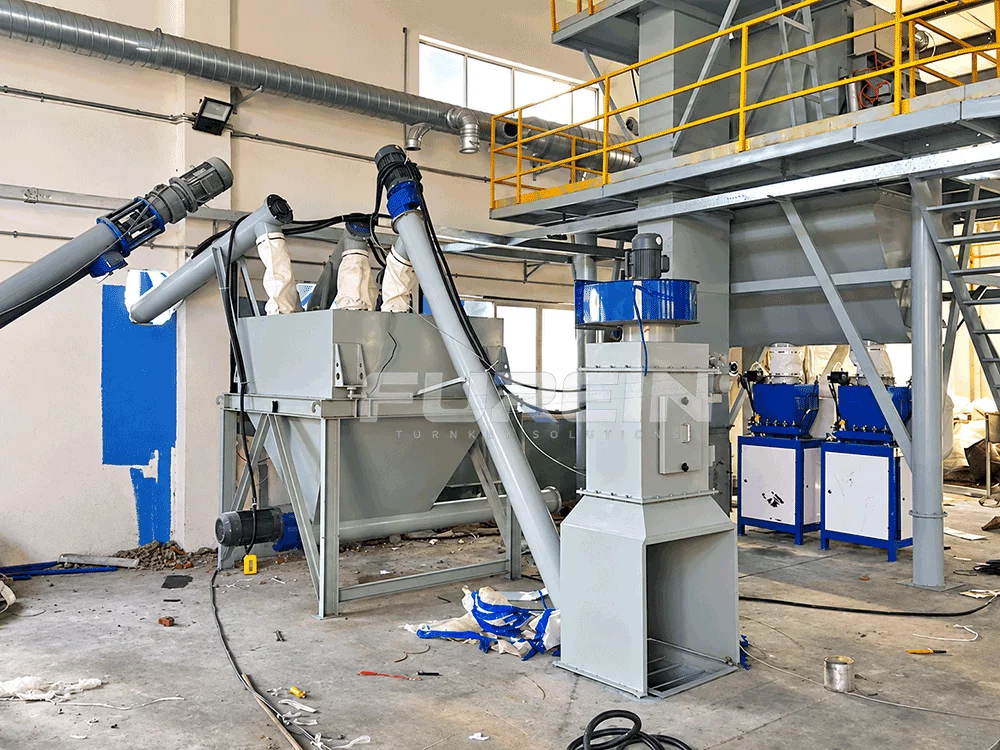
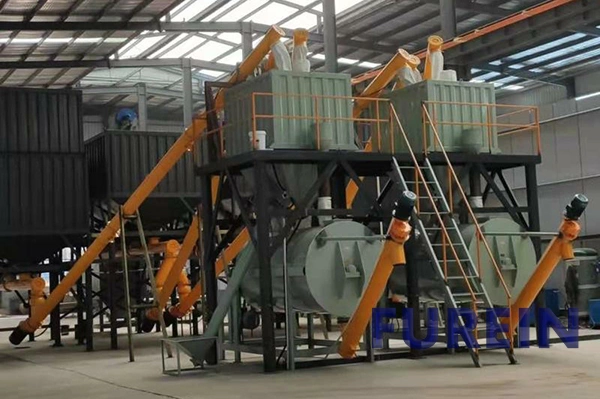
Tile Adhesive Plant Projects
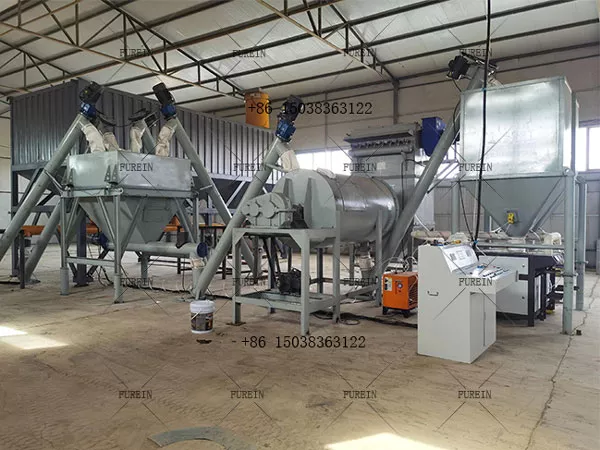
How Much Does a Tile Adhesive Manufacturing Plant Cost?
There is no single price for a complete tile adhesive plant because the final cost depends on the production capacity, number of raw material silos, mixer type, automation level, additive dosing system, sand drying requirements, packing method and plant structure.
A semi-automatic tile adhesive production line costs 8000-30000 ดอลล่าร์.
A fully automatic tile adhesive manufacturing plant costs 20,000-50,000 ดอลลาร์สหรัฐ.
If you want to know more about the cost of tile adhesive manufacturing plant, you can keep reading the follow artical: ต้องใช้เงินเท่าไหร่ในการเริ่มสายการผลิตกาวติดกระเบื้อง?
ข้อมูลการจัดส่งล่าสุดของโรงงานผลิตกาวติดกระเบื้อง
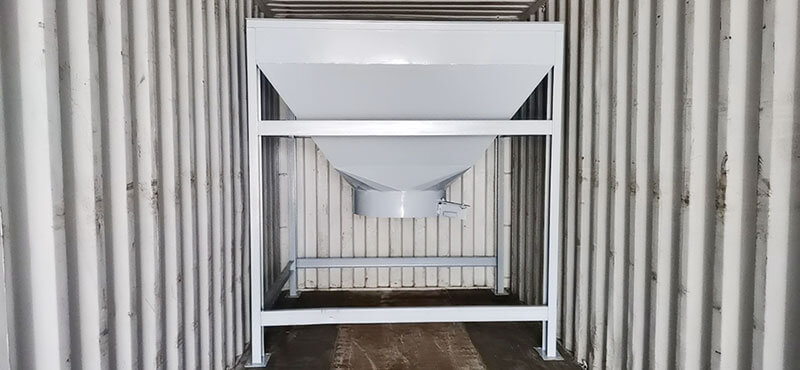
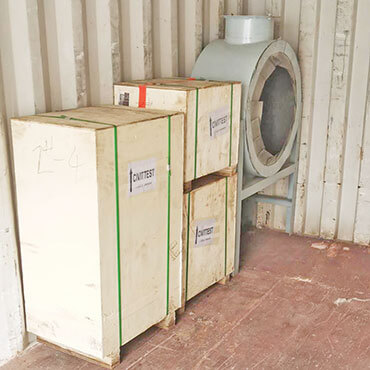
โรงงานผลิตกาวติดกระเบื้องอัตโนมัติเต็มรูปแบบจัดส่งไปยังปารากวัย
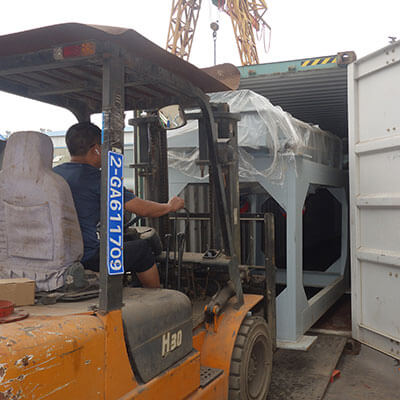
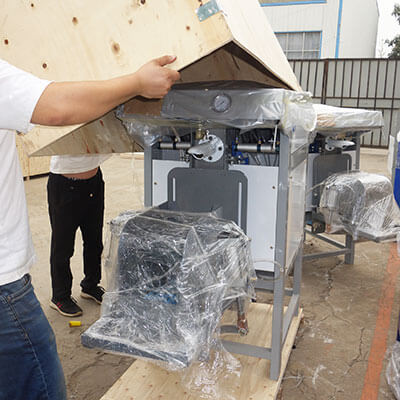
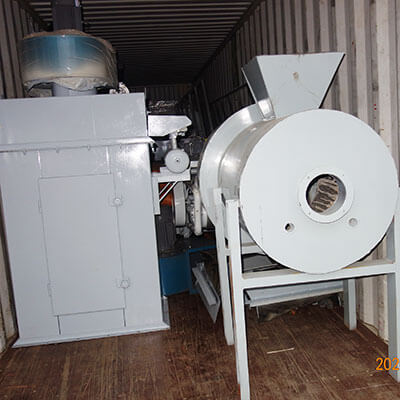
สถานที่ทำงานล่าสุดของเครื่องผลิตกาวติดกระเบื้อง
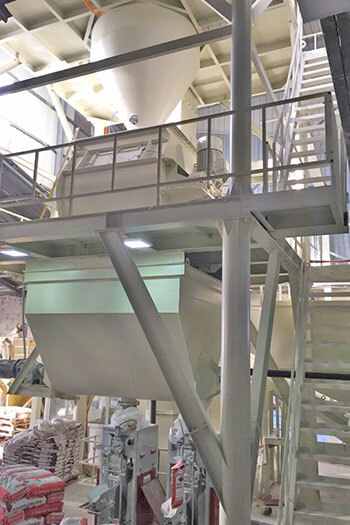
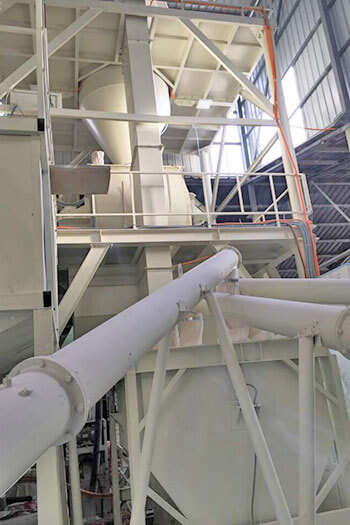
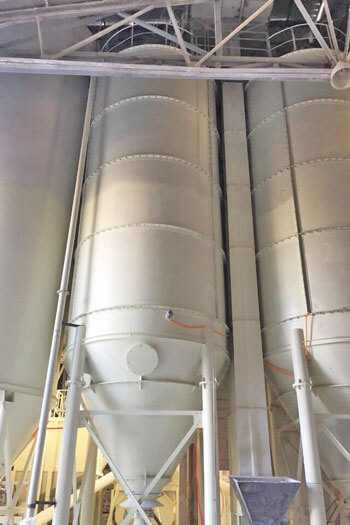
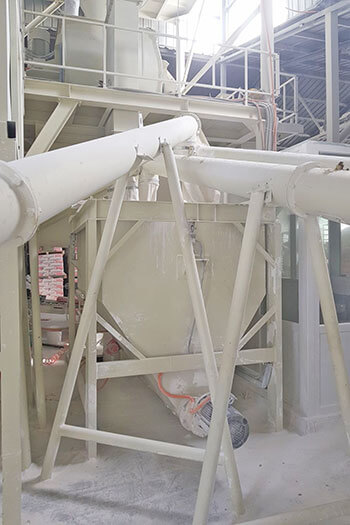
ผลผลิตประจำปีของโรงงานผลิตกาวติดกระเบื้องคือ 200,000-600,000 ตัน. บางครั้งเรียกว่าเครื่องผสมกาวกระเบื้อง, สายการผลิตนี้มีระบบการจัดเก็บวัตถุดิบ, ระบบอบแห้ง, ระบบชั่งน้ำหนัก, ระบบผสม, ระบบบรรจุภัณฑ์, ระบบควบคุม, ฯลฯ. ใช้การควบคุมไมโครคอมพิวเตอร์, อินเตอร์เฟซการทำงานภาษาอังกฤษ, สามารถตระหนักถึงการจัดเก็บข้อมูล, การพิมพ์รายงานการผลิต, ระดับการควบคุมกระบวนการผลิตทั้งหมดอยู่ในระดับสูง, สามารถรับรู้ถึงการผลิตจำนวนมากอย่างต่อเนื่อง, เพื่อให้มั่นใจว่าผลิตภัณฑ์เป็นไปตามสูตรการผลิตที่ควบคุมอย่างเคร่งครัด, ลดข้อผิดพลาดจากเหตุผลของมนุษย์เพื่อรับประกันความเสถียรของคุณภาพของผลิตภัณฑ์, เป็นตัวเลือกที่เหมาะสำหรับการผลิตกาวปูกระเบื้อง.
โรงงานผลิตกาวติดกระเบื้องทำงานอย่างไร?
FAQs For Tile Adhesive Manufacturing Plant
ใช่. FUREIN provides installation and commissioning support for tile adhesive production lines and other dry mortar equipment.
We provide installation drawings, equipment instructions and operator training. For projects that require on-site support, FUREIN engineers can also travel to the customer's country to guide the tile adhesive plant installation and commissioning.
After the production line starts running, we can continue to provide technical support, spare parts and equipment operation guidance when needed.
ใช่. FUREIN can provide a complete tile adhesive plant layout and turnkey production line design.
After confirming your target products, required capacity, วัตถุดิบ, factory dimensions and automation requirements, our engineers can prepare the production process, equipment configuration and plant layout for your reference.
Our turnkey tile adhesive production line solution can cover plant design, equipment manufacturing, installation guidance and commissioning support.
You only need to tell us your basic project requirements, and we can work through the remaining technical details step by step.
The right tile adhesive production line automation level should be selected according to production capacity, ค่าแรง, number of formulas and investment budget.
For a small tile adhesive plant, manual additive feeding combined with automatic mixing and packing may already be enough.
For a medium or large automatic tile adhesive manufacturing plant, automatic raw material weighing, additive dosing, การผสม, packing and PLC recipe control can reduce manual work and improve production consistency.
We do not recommend unnecessary automation. The goal is to choose a tile adhesive plant configuration that matches your real production needs and avoids over-investment.
For most automatic tile adhesive production lines, we normally recommend a double-shaft paddle mixer, also called a double-shaft gravity-free mixer.
The double-shaft mixer provides fast mixing, good mixing uniformity and short discharge time, making it suitable for most standard tile adhesive formulations.
If the material has special characteristics, such as higher viscosity, fibers or a need for stronger dispersion, a ploughshare mixer for tile adhesive production may be a better choice.
The final mixer selection should be based on the tile adhesive formula and material characteristics, not only on production capacity.
ใช่. A tile adhesive production line can be equipped with an automatic chemical additive dosing system.
For a small tile adhesive manufacturing plant, the amount of cellulose ether, starch ether and other additives used in each batch is relatively small. Manual pre-weighing and feeding is usually more economical and keeps the system simple.
For a medium or large automatic tile adhesive production line, we normally recommend an automatic micro-dosing system. It can weigh and feed low-percentage additives according to the preset formula, helping reduce manual errors and improve batch consistency.
ใช่. A tile adhesive manufacturing plant can normally be used to produce different dry mortar products, เช่น กาวติดกระเบื้อง, ฉาบผนัง, skim coat, plaster mortar and some other cement-based dry powder products.
The exact dry mortar production line configuration depends on the product formula, mixer type, additive dosing method and packing requirements.
If the same production line is used for products with very different colors or formulas, cleaning between batches becomes more important. For frequent color changes, we may recommend a separate production line or a more suitable cleaning solution to reduce cross-contamination.
Whether you need a sand dryer for tile adhesive production depends mainly on the moisture of the sand.
If you buy ready-to-use dry graded sand, a sand drying system is normally not required.
If you use wet natural sand, especially when the sand moisture is higher than about 1%, we normally recommend adding a sand drying and screening line before the tile adhesive production line.
Dry and stable sand helps improve weighing accuracy, mixing stability and the overall production efficiency of the tile adhesive manufacturing plant.
The required tile adhesive plant factory space depends on the production capacity and plant layout.
A small tile adhesive production line can normally be installed in about 50 m² of space. For this type of plant, a workshop height of around 7 meters or less can usually be considered, depending on the final configuration.
A larger automatic tile adhesive manufacturing plant normally requires around 200 m² or more.
If you already have an existing workshop, ฟุริอิน can adjust the tile adhesive plant layout according to the available length, width and height, and prepare a more suitable equipment arrangement.
The right tile adhesive production line capacity mainly depends on your expected daily production and current sales volume.
If you are just starting a tile adhesive business, a 1–8 T/H tile adhesive production line is usually a practical choice. It requires less investment and is easier to operate.
For a medium-sized manufacturer, we normally recommend an automatic tile adhesive production line of about 10–15 T/H.
If you already have a stable local market and need to increase production, a 20–30 T/H fully automatic tile adhesive manufacturing plant can provide higher output and a higher level of automation.
Choosing the right capacity can help avoid unnecessary equipment and over-investment.
The tile adhesive manufacturing plant cost mainly depends on the production capacity, automation level and equipment configuration.
A small or semi-automatic tile adhesive production line normally costs about USD 8,000–15,000. It is suitable for customers who are just starting production or need a relatively small capacity.
For an automatic tile adhesive manufacturing plant, the price normally starts from around USD 20,000 and increases according to the required capacity, number of silos, ระบบแบทช์อัตโนมัติ, additive dosing system, packing machine and other optional equipment.
For a more accurate tile adhesive production line price, we recommend confirming your required capacity and product first, and then preparing the equipment configuration.
Planning a Tile Adhesive Manufacturing Plant?
Tell us your target products, required capacity, raw materials and factory conditions. We will help you prepare a suitable production process, equipment configuration and plant layout.
You do not need to have every technical detail ready. Start with the product and capacity, and we can work through the rest together.