Planta de fabricação de adesivos para azulejos
Complete Production Lines for Tile Adhesive, Tile Glue and Cement-Based Dry Mortar
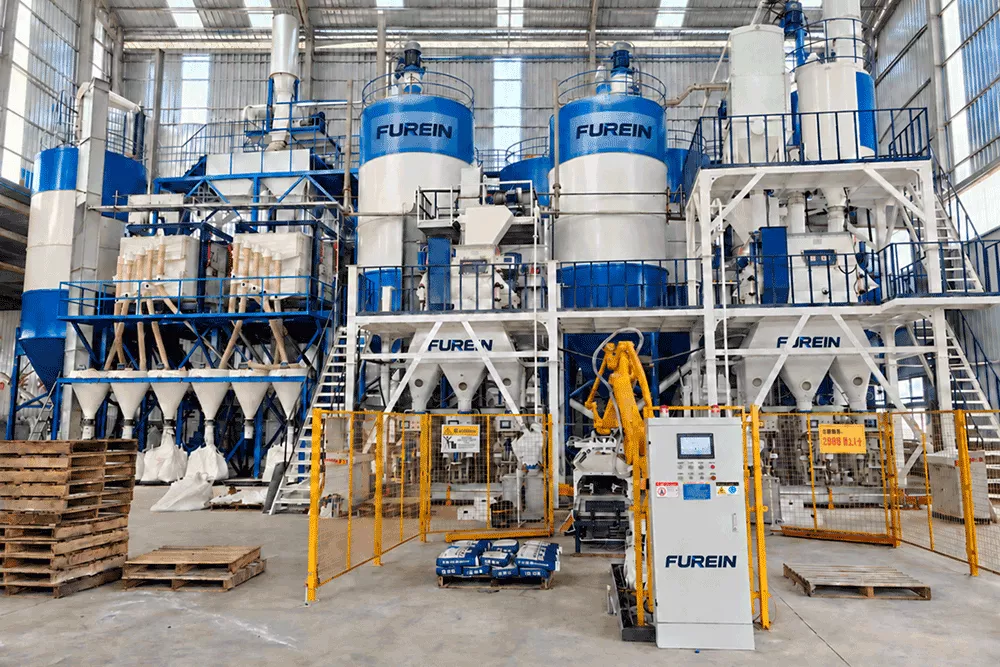
FUREIN designs and manufactures complete tile adhesive production lines for medium and large-scale production. From raw material storage, automatic weighing and chemical additive dosing to mixing, packing and palletizing, each plant is configured according to your formula, required capacity, factory conditions and automation level.
5–30+ T/H
Flexible Capacity
Automatic Batching
Accurate Formula Control
Micro Additive Dosing
Complete Process
Embalagem & Palletizing
Turnkey Engineering
What Is a Tile Adhesive Manufacturing Plant?
A tile adhesive manufacturing plant is a complete production system used to store, weigh, dose, mix and pack cement, dried sand, fillers and chemical additives according to a preset formulation.
Unlike a compact tile adhesive making machine, a complete plant usually includes raw material silos, lote automático, additive dosing, high-efficiency mixing, finished product storage, dust collection, packing and optional palletizing systems. It is designed for customers who need higher production capacity, better automation and more stable batch consistency.
Looking for a compact 1–10 T/H solution?
Choose Your Tile Adhesive Production Line
Como fornecedor profissional de fábrica de adesivos para azulejos, sempre aderimos a uma crença constante: qualidade de primeira, serviço profissional, tecnologia líder. Isso nos ajudou a obter muitos clientes recorrentes, e aqui, we'll show you how to choose the right tile adhesive manufacturing plant.
Planta de fabricação de adesivos de telha semiautomática
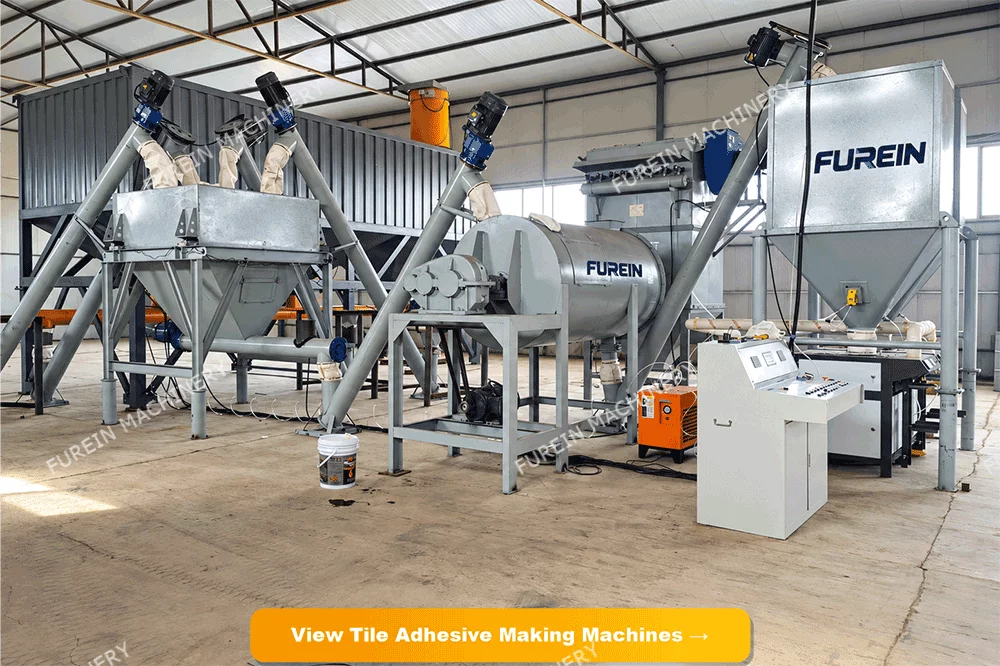
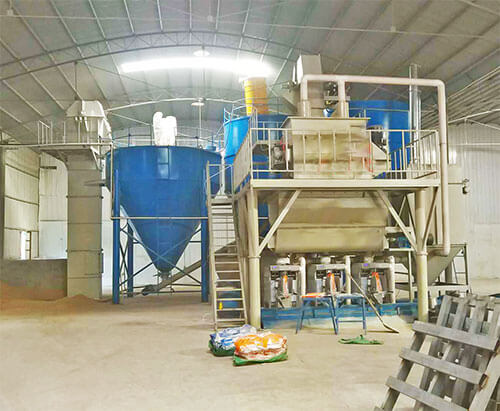
A practical solution for medium production volumes. The plant can include semi-automatic raw material feeding, a double-shaft mixer and valve bag packing machine.
| Capacidade | 5-10t/h Tile Adhesive Production Line |
|---|---|
| Modelo do misturador | Máquina misturadora de adesivo para telha de eixo duplo |
| Potência do misturador | 5.5-15kw |
| Sistema de controle | Semiautomático com armário de controle elétrico |
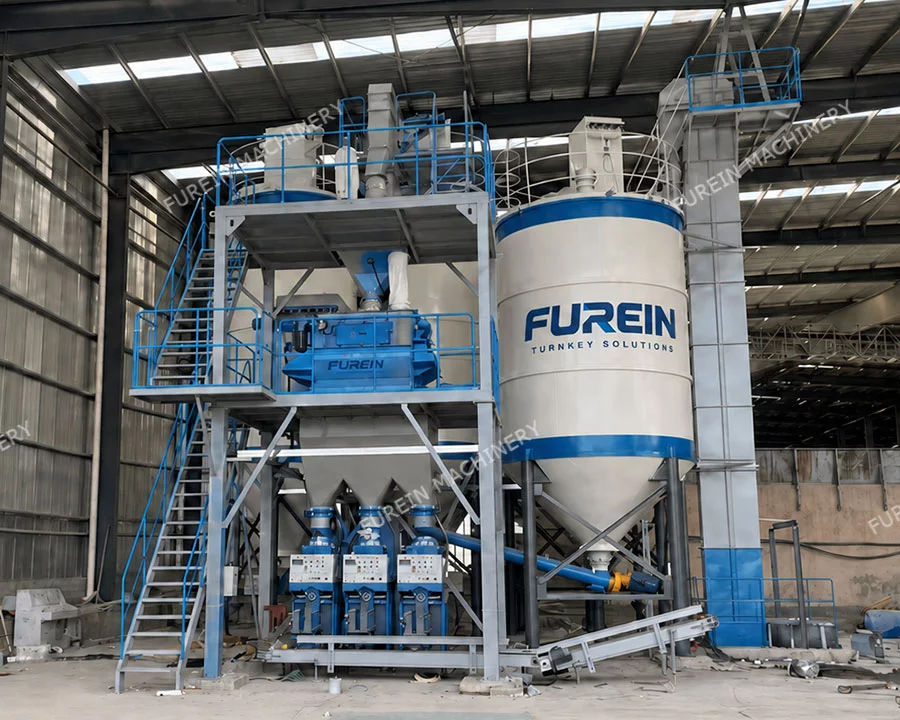
Medium Automatic Tile Adhesive Plant
Designed for continuous commercial production with multiple raw materials, automatic batching and higher packaging efficiency. The system can be configured to produce tile adhesive together with wall putty, skim coat and other cement-based dry mortar products.
| Capacidade | 10–20 T/H Automatic Tile Adhesive Plant |
|---|---|
| Modelo do misturador | Máquina misturadora de adesivo para telha de eixo duplo |
| Poder total | 45-65kw |
| Sistema de controle | Automatic weighing and packing with PLC contol |
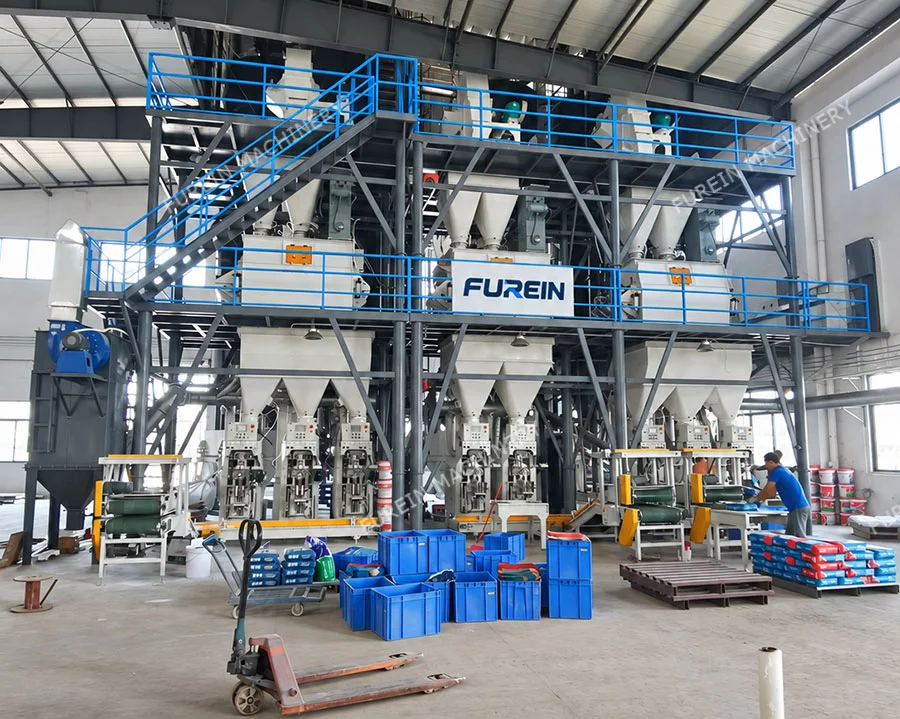
Large / Tower-Type Tile Adhesive Manufacturing Plant
A vertically arranged plant for higher output and greater automation. Raw materials flow through storage, pesagem, mixing and packing sections with fewer intermediate transfers, making the system suitable for industrial-scale production.
| Capacidade | 20–30+ T/H Tower-Type Tile Adhesive Manufacturing Plant |
|---|---|
| Modelo do misturador | M3000, M4000 |
| Potência do misturador | 20-30kw |
| Sistema de controle | Fully automatic with PLC control system, all in one. |
Which Plant Is Right for You?
| Project | 5-10 º | 10-20 º | 20-30º |
|---|---|---|---|
| Best for | Growing producers | Commercial factories | Industrial production |
| Main material feeding | Automatic | Automatic | Fully Automatic |
| Additives Dosing | Manual / Optional | Semi /Automatic | Automatic micro-dosing |
| Mixer | Double shaft mixer | Zero-gravity mixer | Industrial paddle mixer or plough mixer |
| Embalagem | 1-2 packing machines | 2-3 packers | Multiple packing lines |
| Palletizing | Optional | Optional | Recommended |
| Factory height suggestion | 6-10m | 10-15m | 13-20m |
| Automation | Médio | High | High |
Not sure which configuration fits your project? Start with your target capacity, products and factory dimensions.
Complete Tile Adhesive Manufacturing Process
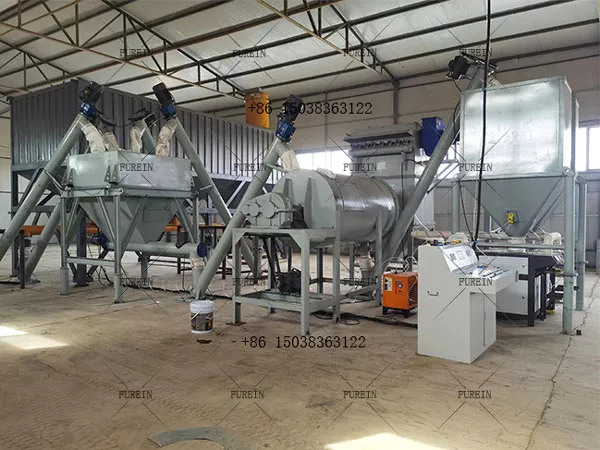
A fábrica de adesivos para ladrilhos geralmente usa 3-6 silos de matéria prima, quais dois grandes silos são usados para armazenar material como pó de cálcio, e o resto dos pequenos silos são usados para reter cálcio leve, cálcio pesado, areia, pequenos materiais, etc. Cálcio leve, cálcio pesado, areia, material pequeno e assim por diante precisa usar elevador de balde para o pequeno silo, sistema de distribuição de material inteligente para suportar uma operação do tipo de distribuição de elevador de caçamba, para evitar o desperdício de recursos.
O sistema de pesagem, com a cooperação do transportador helicoidal, transfere as matérias-primas do silo para a tremonha de pesagem, e realiza a pesagem de matérias-primas através do feedback de dados do sensor. O material do poço de pesagem, através do guia do transportador de parafuso para a máquina de caçamba principal, levante para a máquina de mistura de argamassa seca para ser misturada no silo. O misturador de argamassa seca é um tipo de porta aberta pneumática, que pode colocar rapidamente os materiais a serem misturados no misturador sem peso para realizar a produção contínua de adesivo para azulejos.
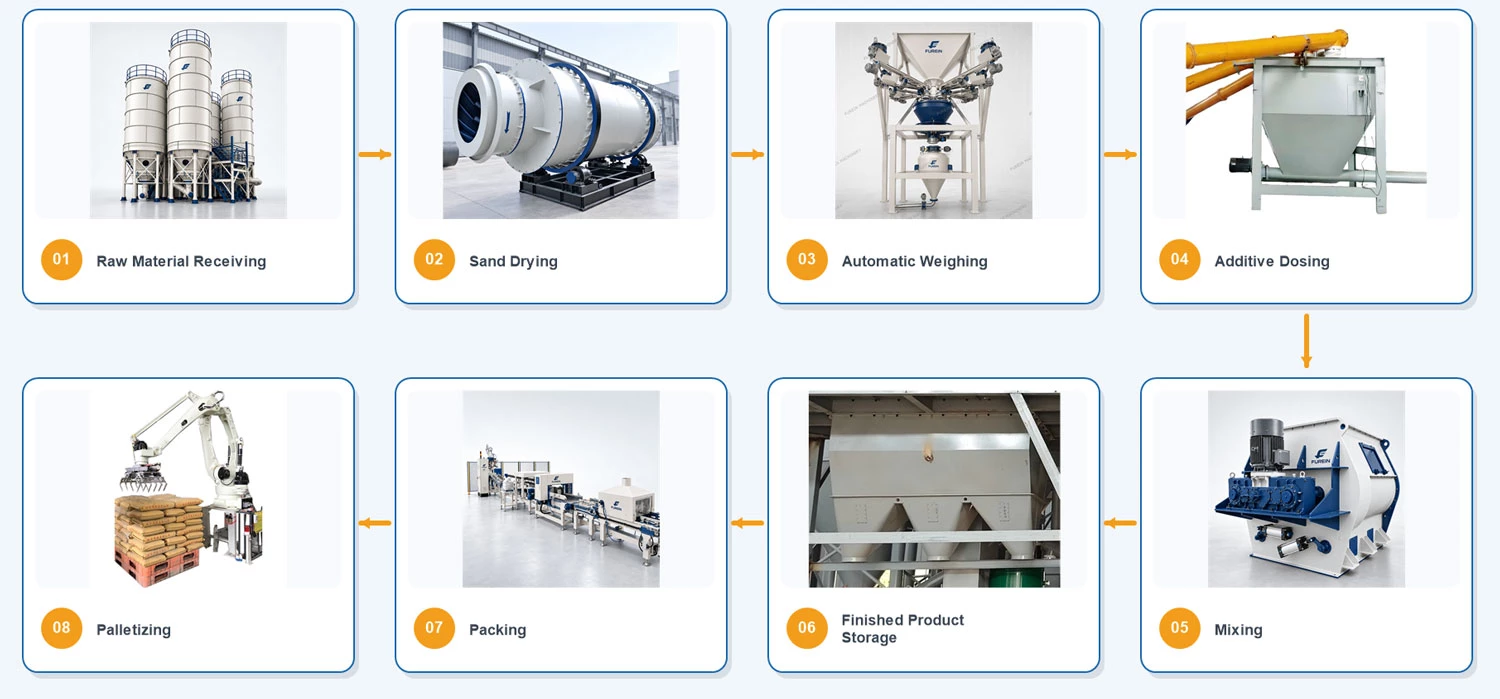
Partes principais da máquina automática de fabricação de adesivos para azulejos
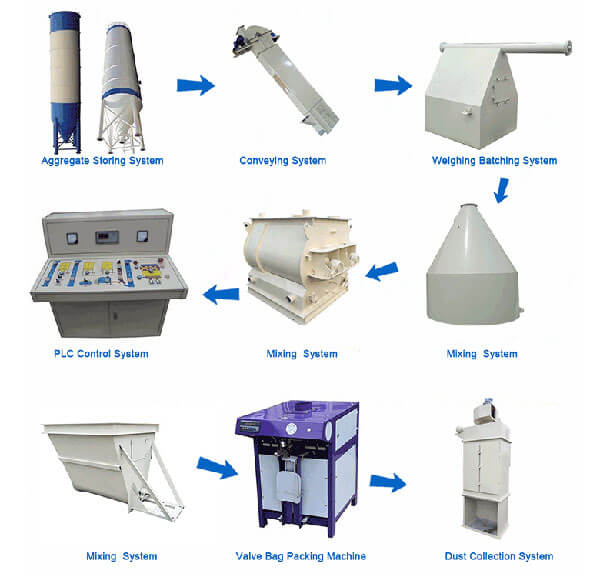
1. Silo de armazenamento de matéria-prima
Máquina de fabricação de adesivos de cerâmica para armazenamento de grandes matérias-primas, geralmente usam design de tanque, usando a alimentação do caminhão-tanque. Durante a construção do projeto, apenas dois pequenos tanques de armazenamento de matérias-primas são necessários para armazenar pequenas matérias-primas.
2. Sistema de dosagem e pesagem
É composto por balança de pesagem de tremonha, dragão de inundação, dispositivo de descarga, dispositivo de adição de micro material e sistema de controle de computador. Pode de acordo com a fórmula ser medição automática de matérias-primas diferentes, reduzir a intensidade do trabalho e a poluição ambiental, também garantir a qualidade do produto de cola de cerâmica.
3. Misturador de argamassa seca
Existem muitas opções de máquinas de mistura de adesivos para azulejos, como misturador de cinto nu de três camadas, misturador de arado, misturador de argamassa seca de eixo duplo, etc.
Os requisitos da máquina de mistura adesiva para azulejos são de mistura uniforme, sem ângulo morto, alta eficiência, equipamento resistente ao desgaste, velocidade de descarga rápida.
Recomenda-se o uso de um misturador de eixo duplo sem peso, qual é o misturador de pó seco mais popular.
O misturador de arado é mais adequado para misturar materiais de fibra e líquidos.
Existem dois tipos de sacos de embalagem: sacos abertos e sacos de válvula. No processo de fabricação de adesivos para azulejos, máquina de embalagem de porta de válvula é usada mais, Não requer costura, só precisa de uma operação de uma pessoa, mas esta máquina de embalagem não é adequada para embalar materiais leves, o custo da bolsa é um pouco maior, mas a velocidade de embalagem é rápida.
Usado para recuperar poeira na máquina de fabricação de rejunte de azulejos, bom para a proteção ambiental. Geralmente está localizado no topo do silo de cimento, a porta de alimentação do elevador de caçamba, a porta de embalagem da máquina de embalagem, etc.
6. Estrutura de transporte e elevação
O transporte de materiais na linha de produção é: transporte horizontal e transporte vertical, transporte horizontal pode usar transportadores de parafuso, o transporte vertical geralmente adota elevadores de caçamba.
Raw Materials for Tile Adhesive Production
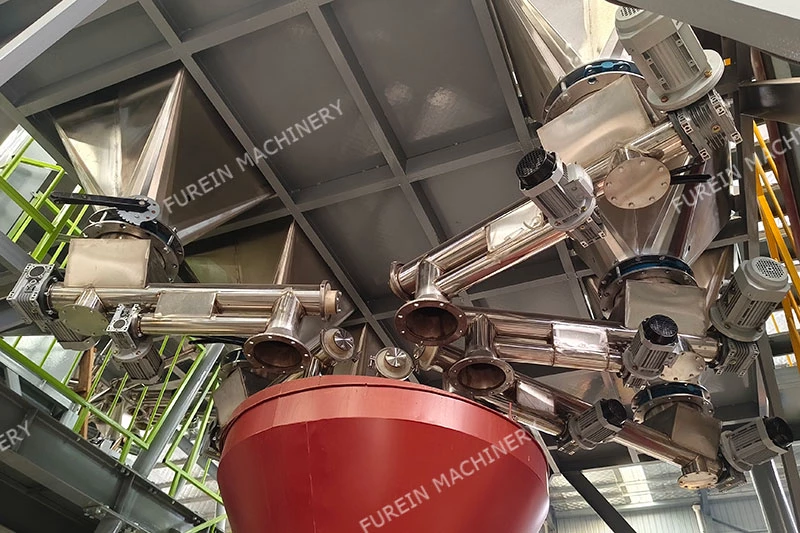
Tile adhesive generally contains cement, dried graded sand, fillers and several low-ratio chemical additives. Because some additives represent only a small percentage of the total formula, accurate weighing and uniform distribution are important for consistent finished-product performance.
Why Additive Dosing Matters
In tile adhesive formulations, some additives are used at very low dosage levels. When the required amount is only a few kilograms per batch, even a small weighing error can create a relatively large percentage deviation.
For small tile adhesive plants, additives can be pre-weighed and added manually. This keeps the equipment simple and reduces the initial investment.
For medium and large automatic tile adhesive production lines, an automatic micro-dosing system can weigh and feed low-percentage additives according to the preset formula. This reduces manual dosing errors, improves batch repeatability and makes frequent recipe changes easier to manage.
Choosing the Right Mixer for a Tile Adhesive Production Line
The mixer should be selected according to the formulation, batch size and required mixing quality—not simply by choosing the largest motor or vessel.
Double-Shaft Paddle Mixer
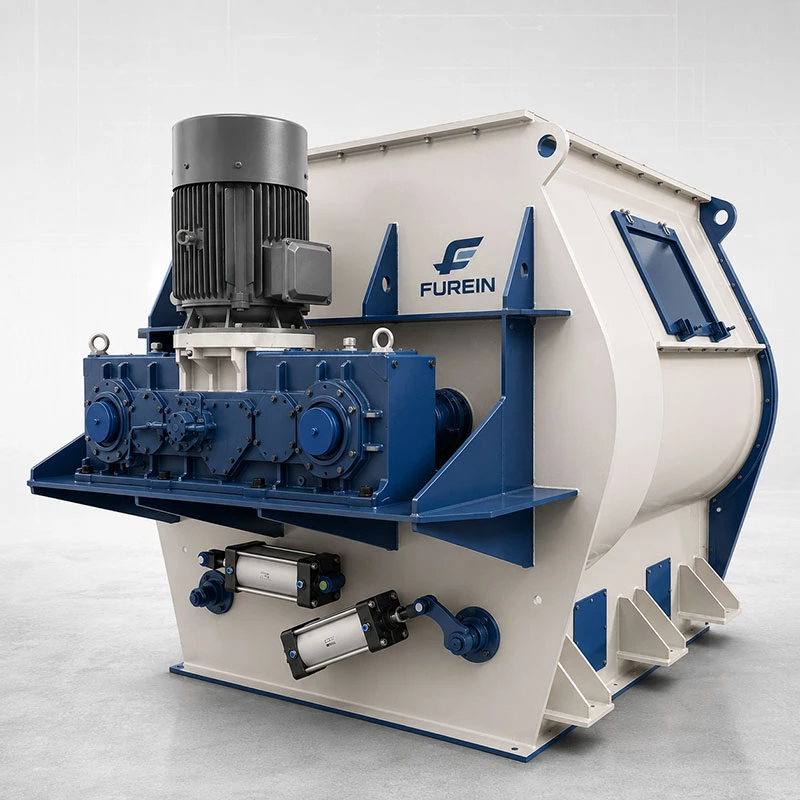
Suitable for most commercial tile adhesive plants because of its fast mixing speed, high uniformity and short discharge cycle.
Ploughshare Mixer
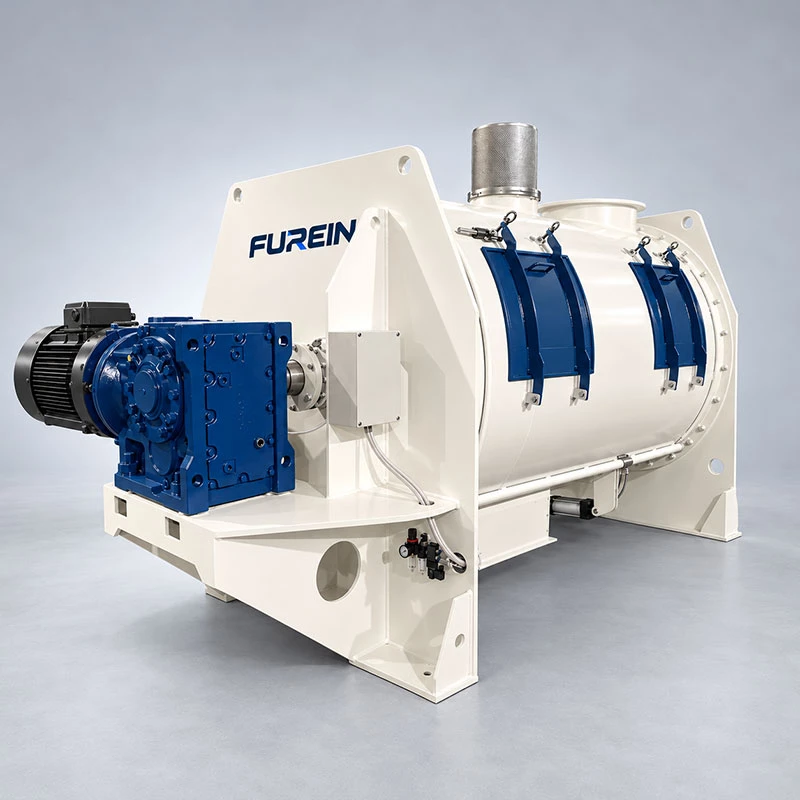
Recommended when the formulation contains fibers, liquids or materials requiring stronger dispersion.
Do You Need a Sand Dryer?
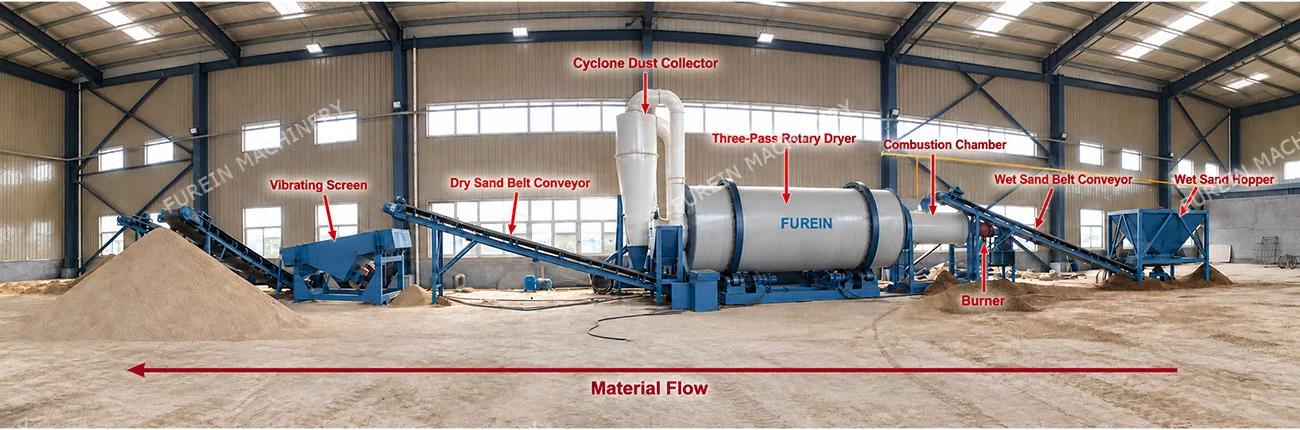
Sand moisture and required dry sand output should be confirmed before dryer selection.
Purchased Dry Sand
No Dryer Required
If dry graded sand with stable moisture is available locally, the plant can be simplified and the initial investment reduced.
Wet Natural Sand
Secagem & Screening Required
If river sand or other wet natural sand is used, a rotary dryer and screening system are normally installed before the storage section. In a tile adhesive manufacturing plant, a sand drying line is required if the moisture content of the wet sand exceeds 0.5%.
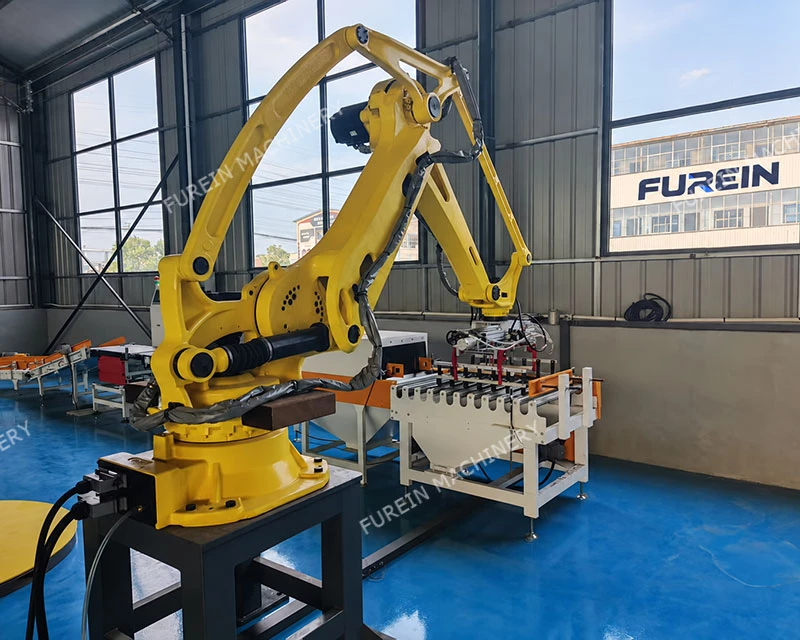
Devo escolher um paletizador automático?
Como um azulejo experiente fabricação de adesivos fabricante de máquinas, recomendamos escolher um paletizador automático se sua produção for superior a 10t/h, o que aumenta a produtividade e economiza custos de mão de obra. No entanto, para garantir a qualidade dos produtos, devemos escolher um fornecedor confiável e nos pedir conselhos.
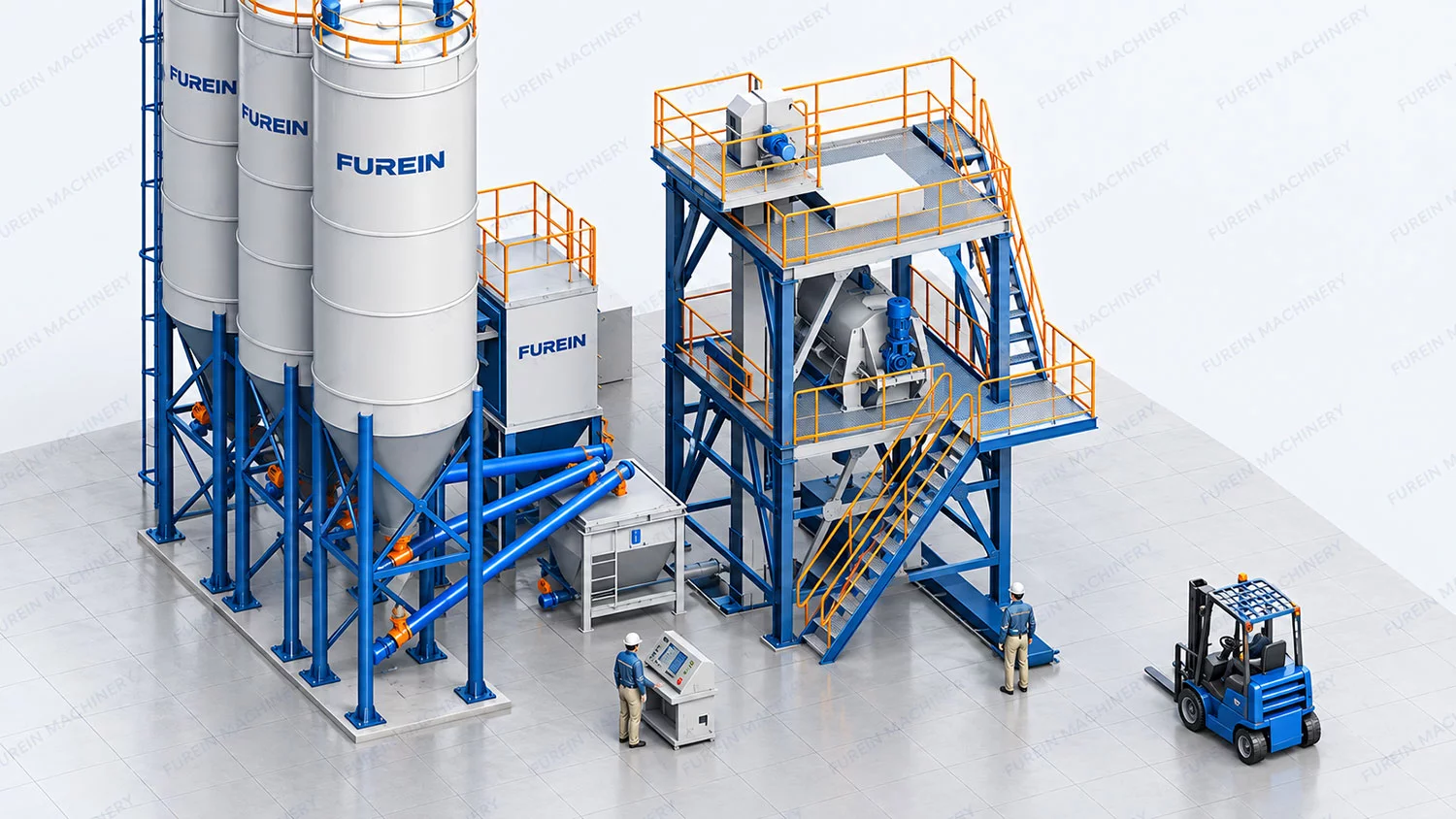
Every Tile Adhesive Production Line Design Starts with the Right Layout
Before equipment manufacturing begins, we review the required products, formulas, plant capacity, matérias-primas, factory dimensions, automation level and local operating conditions.
Our engineers then prepare the production process, equipment configuration and plant layout. The goal is not simply to fit all machines into the building. The tile adhesive plant layout should make material flow smoother, reduce unnecessary transfer, leave enough maintenance space and make future operation easier.
Process Design
From raw material receiving to finished bag.
2D / 3D Plant Layout
Designed according to actual factory dimensions.
Installation Planning
Positions, elevations and interfaces prepared in advance.
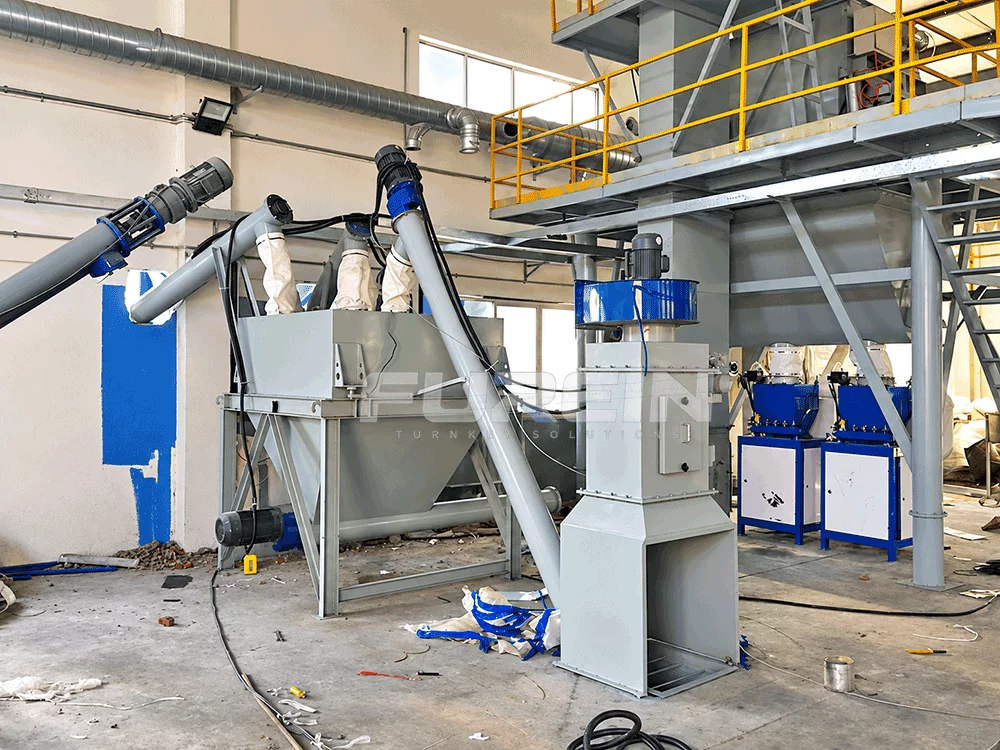
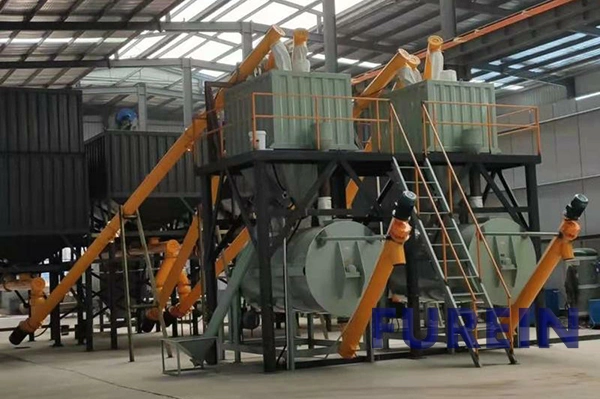
Tile Adhesive Plant Projects
- 8–Linha de produção automática de adesivo para azulejos de 10 T/H no KuwaitCindy2026-09-22T15:08:47+08:00
- Atualização personalizada, Construa sua linha de produção de adesivo para azulejos atualizadaCindy2026-10-11T21:16:52+08:00
How Much Does a Tile Adhesive Manufacturing Plant Cost?
There is no single price for a complete tile adhesive plant because the final cost depends on the production capacity, number of raw material silos, mixer type, automation level, additive dosing system, sand drying requirements, packing method and plant structure.
Um ladrilho semiautomático adhesive production line costs 8000-30000 USD.
Um totalmente automático tile adhesive manufacturing plant costs 20,000-50,000 dólares americanos.
If you want to know more about the cost of tile adhesive manufacturing plant, you can keep reading the follow artical: Quanto dinheiro seria necessário para iniciar uma linha de produção de adesivo para azulejo?
Informações de envio mais recentes da planta de fabricação de adesivos de telha
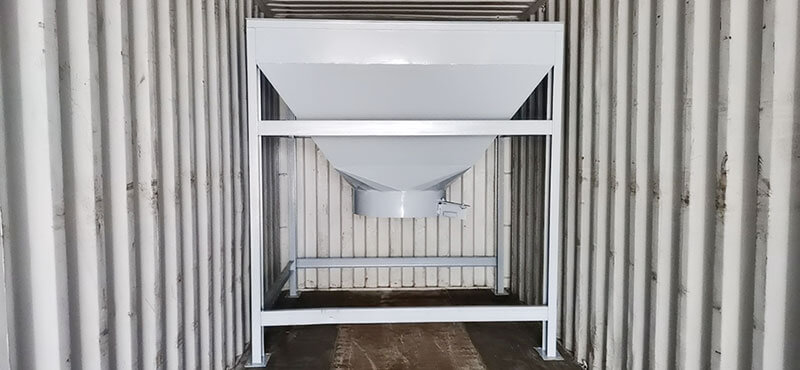
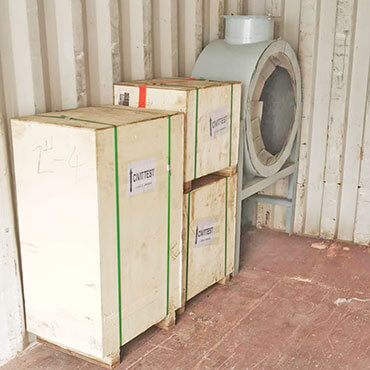
Planta de fabricação de adesivos para azulejos totalmente automática é enviada para o Paraguai
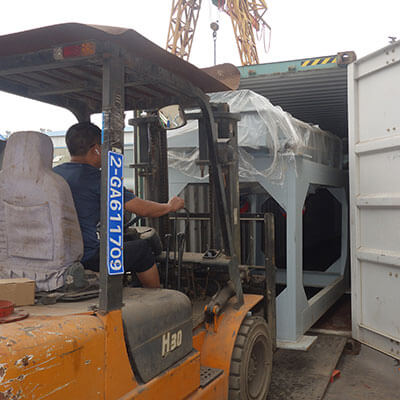
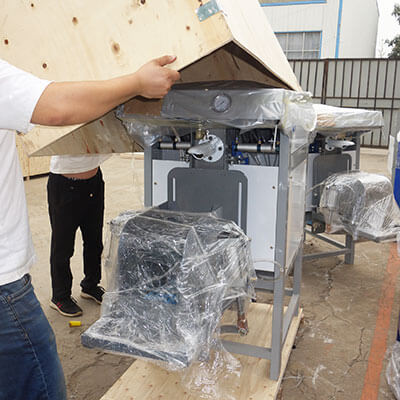
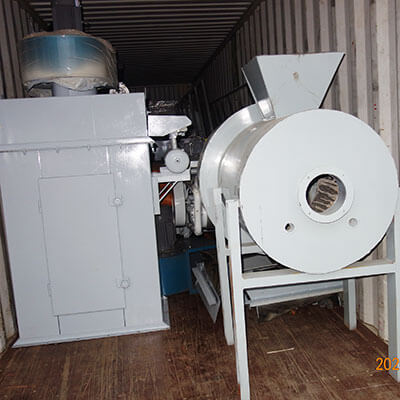
Último local de trabalho da máquina de fabricação de adesivo para ladrilho
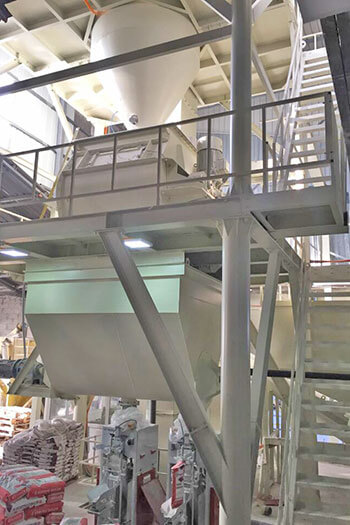
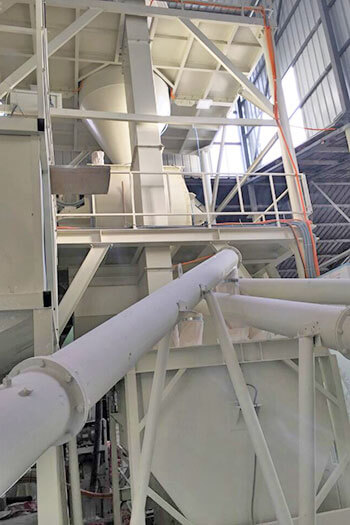
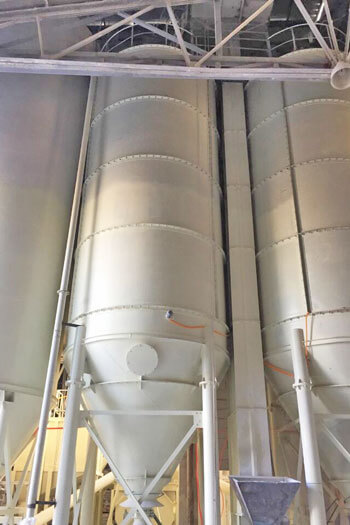
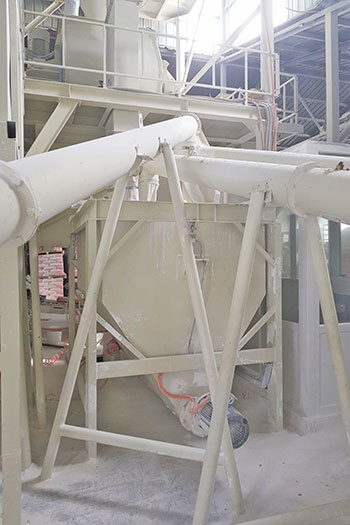
A produção anual da fábrica de adesivos para azulejos é 200,000-600,000 toneladas. Às vezes chamado de máquina de mistura adesiva de azulejos, esta linha de produção inclui sistema de armazenamento de matéria-prima, sistema de secagem, sistema de pesagem, sistema de mistura, sistema de embalagem, Sistema de controle, etc. Adote o controle do microcomputador, interface de operação em inglês, pode realizar o armazenamento de dados, impressão de relatório de produção, todo o processo de grau de controle de produção é alto, pode realizar a produção em massa contínua, para garantir que o produto estritamente de acordo com a produção de controle de fórmula, reduzir o erro da razão humana para garantir a estabilidade da qualidade do produto, é a escolha ideal para a produção de cola para azulejos.
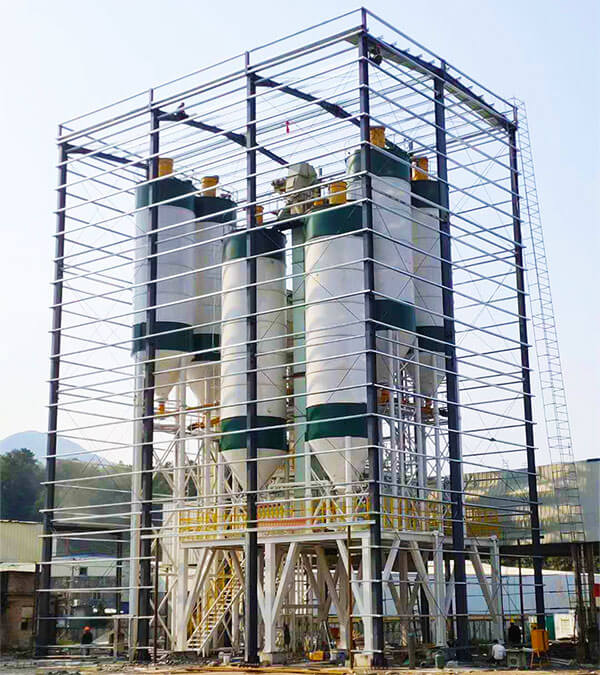
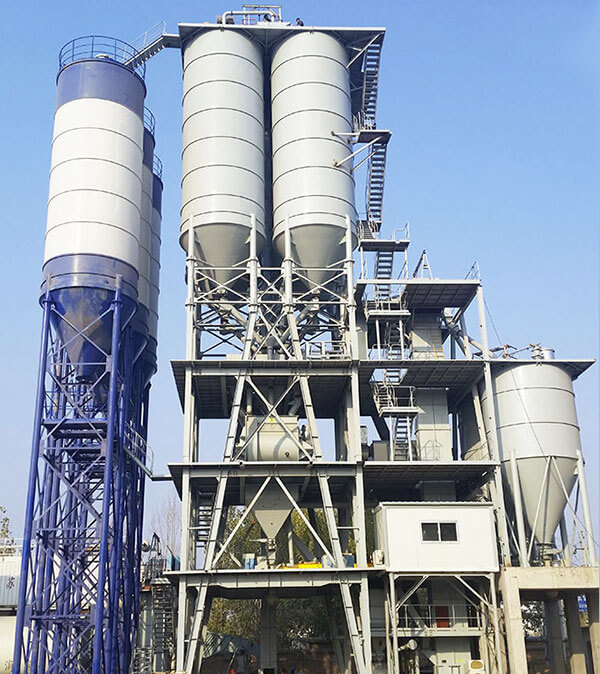
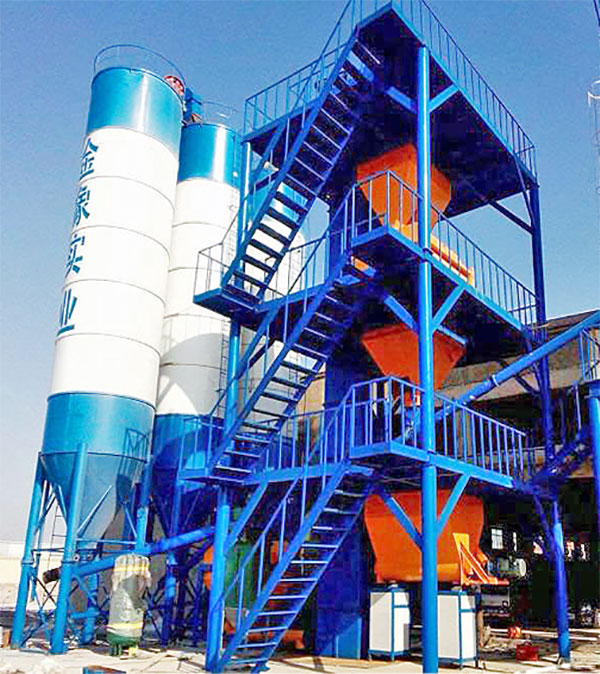
Como funciona uma fábrica de adesivos para azulejos?
FAQs For Tile Adhesive Manufacturing Plant
Sim. FUREIN provides installation and commissioning support for tile adhesive production lines and other dry mortar equipment.
We provide installation drawings, equipment instructions and operator training. For projects that require on-site support, FUREIN engineers can also travel to the customer's country to guide the tile adhesive plant installation and commissioning.
After the production line starts running, we can continue to provide technical support, spare parts and equipment operation guidance when needed.
Sim. FUREIN can provide a complete tile adhesive plant layout and turnkey production line design.
After confirming your target products, required capacity, matérias-primas, factory dimensions and automation requirements, our engineers can prepare the production process, equipment configuration and plant layout for your reference.
Our turnkey tile adhesive production line solution can cover plant design, equipment manufacturing, installation guidance and commissioning support.
You only need to tell us your basic project requirements, and we can work through the remaining technical details step by step.
The right tile adhesive production line automation level should be selected according to production capacity, custo de mão de obra, number of formulas and investment budget.
For a small tile adhesive plant, manual additive feeding combined with automatic mixing and packing may already be enough.
For a medium or large automatic tile adhesive manufacturing plant, automatic raw material weighing, additive dosing, misturando, packing and PLC recipe control can reduce manual work and improve production consistency.
We do not recommend unnecessary automation. The goal is to choose a tile adhesive plant configuration that matches your real production needs and avoids over-investment.
For most automatic tile adhesive production lines, we normally recommend a double-shaft paddle mixer, also called a double-shaft gravity-free mixer.
The double-shaft mixer provides fast mixing, good mixing uniformity and short discharge time, making it suitable for most standard tile adhesive formulations.
If the material has special characteristics, such as higher viscosity, fibers or a need for stronger dispersion, a ploughshare mixer for tile adhesive production may be a better choice.
The final mixer selection should be based on the tile adhesive formula and material characteristics, not only on production capacity.
Sim. A tile adhesive production line can be equipped with an automatic chemical additive dosing system.
For a small tile adhesive manufacturing plant, the amount of cellulose ether, starch ether and other additives used in each batch is relatively small. Manual pre-weighing and feeding is usually more economical and keeps the system simple.
For a medium or large automatic tile adhesive production line, we normally recommend an automatic micro-dosing system. It can weigh and feed low-percentage additives according to the preset formula, helping reduce manual errors and improve batch consistency.
Sim. A tile adhesive manufacturing plant can normally be used to produce different dry mortar products, como adesivo para azulejos, massa de parede, skim coat, plaster mortar and some other cement-based dry powder products.
The exact dry mortar production line configuration depends on the product formula, mixer type, additive dosing method and packing requirements.
If the same production line is used for products with very different colors or formulas, cleaning between batches becomes more important. For frequent color changes, we may recommend a separate production line or a more suitable cleaning solution to reduce cross-contamination.
Whether you need a sand dryer for tile adhesive production depends mainly on the moisture of the sand.
If you buy ready-to-use dry graded sand, a sand drying system is normally not required.
If you use wet natural sand, especially when the sand moisture is higher than about 1%, we normally recommend adding a sand drying and screening line before the tile adhesive production line.
Dry and stable sand helps improve weighing accuracy, mixing stability and the overall production efficiency of the tile adhesive manufacturing plant.
The required tile adhesive plant factory space depends on the production capacity and plant layout.
A small tile adhesive production line can normally be installed in about 50 m² of space. For this type of plant, a workshop height of around 7 meters or less can usually be considered, depending on the final configuration.
A larger automatic tile adhesive manufacturing plant normally requires around 200 m² or more.
If you already have an existing workshop, FUREIN can adjust the tile adhesive plant layout according to the available length, width and height, and prepare a more suitable equipment arrangement.
The right tile adhesive production line capacity mainly depends on your expected daily production and current sales volume.
If you are just starting a tile adhesive business, a 1–8 T/H tile adhesive production line is usually a practical choice. It requires less investment and is easier to operate.
For a medium-sized manufacturer, we normally recommend an automatic tile adhesive production line of about 10–15 T/H.
If you already have a stable local market and need to increase production, a 20–30 T/H fully automatic tile adhesive manufacturing plant can provide higher output and a higher level of automation.
Choosing the right capacity can help avoid unnecessary equipment and over-investment.
The tile adhesive manufacturing plant cost mainly depends on the production capacity, automation level and equipment configuration.
A small or semi-automatic tile adhesive production line normally costs about USD 8,000–15,000. It is suitable for customers who are just starting production or need a relatively small capacity.
For an automatic tile adhesive manufacturing plant, the price normally starts from around USD 20,000 and increases according to the required capacity, number of silos, sistema de lote automático, additive dosing system, packing machine and other optional equipment.
For a more accurate tile adhesive production line price, we recommend confirming your required capacity and product first, and then preparing the equipment configuration.
Planning a Tile Adhesive Manufacturing Plant?
Tell us your target products, required capacity, raw materials and factory conditions. We will help you prepare a suitable production process, equipment configuration and plant layout.
You do not need to have every technical detail ready. Start with the product and capacity, and we can work through the rest together.